
10 Best AI SEO Experts in 2026 (Ranked by Real Work)
Almost every list of the best AI SEO experts recycles the same general SEO names under a new title, and most of those people have not published anything specific to AI search.
I went looking for who has actually shipped work on how ChatGPT, Claude and Google AI Overviews decide who gets named.
Original research, named frameworks, dated talks, products people can use. That is the bar for this list.
What is an AI SEO expert?
An AI SEO expert makes a brand visible inside AI-generated answers rather than only in the blue links. The work covers Google AI Overviews, ChatGPT, Claude, Gemini and Perplexity, and it turns on entity clarity, extractable page structure, schema, and being mentioned across sources those systems already trust.
It overlaps with SEO but is not the same job. Ranking first and being named in the answer are separate outcomes, and a page can hold one while losing the other. That is the gap the people below work on.
Why most AI SEO expert lists are useless
Read a few of these roundups and the same problem shows up. The title says AI search, the roster says 2019.
Percepture's roundup gives its own founder around 300 words of dedicated write-up, while Aleyda Solis and Rand Fishkin get about a dozen words each. That is not a list. It is a landing page wearing a list costume.
The self-ranking habit runs deep here. I read six of these pages: Percepture, SEO Discovery, Julian Goldie, Searchbloom, Usama Khan and Kasra Dash's own roundup. In all six, the person who wrote it, or the firm they work for, came out on top. Search any of those names and see for yourself.
So a fair question to ask me: why am I on my own list?
Because I do this work for money, and you deserve to know that when you weigh what I say about everyone else. I put myself at number three, gave my entry the same length as the rest, and named my own limitation like everyone else got.
On the order: this is not a scored ranking and I am not going to pretend it is one. It runs roughly from the people selling AI search work you can actually buy today, through the people producing the research the rest of us build on, down to people worth reading for one specific thing I name in their entry. Every entry says who it is not for. Read those lines as carefully as the rest.
The 10 best AI SEO experts in 2026
The best AI SEO experts in 2026 are Nathan Gotch, Charles Floate, Ryan Doser, Wil Reynolds, Mike King, Aleyda Solis, Andrew Holland, Kyle Roof, Rand Fishkin and Kasra Dash. Each one below is there for a specific, dated piece of AI search work, and each entry says plainly who should not hire them.
I checked each credential below against a primary source, and I link each person's own site so you can verify it yourself. Where someone is better to learn from than to hire, I say so. Several publish no rates at all, so it is worth knowing what AI consultants actually cost before you start those conversations. After the ten you will find six honorable mentions, held to the same standard.
| Expert | Best for | What they shipped on AI search | Not for |
|---|---|---|---|
| Nathan Gotch | SaaS and B2B teams wanting a defined AEO engagement | AEOconsultant.ai, plus AI SEO For Dummies (Wiley, September 2026) | Anyone needing public pricing or a non-SaaS fit |
| Charles Floate | Understanding aggressive tactics | Ranking In AI training webinar, May 2026 | Anyone who wants a playbook safe to copy |
| Ryan Doser | Solo operators and small teams | Zero to 12.1K AI citations in six months (self-reported) | Anyone who wants a team to run the work |
| Wil Reynolds | Original AI search data | Seer's GEO Olympics study, 231,000-plus LLM responses | Solo operators, it is enterprise priced |
| Mike King | Enterprise technical AI search | Named relevance engineering, analyzed the 2024 Google leak | Anyone without an enterprise budget |
| Aleyda Solis | Free AI search education | LearningAIsearch.com, launched July 2025 | Anyone needing a large delivery team |
| Andrew Holland | The brand-mentions side of GEO | Search Engine Land GEO column, fame engineering | Anyone needing schema and technical work |
| Kyle Roof | On-page testing methodology | US patent 10,540,263, POP AI visibility tracker | Anyone wanting advice independent of a tool |
| Rand Fishkin | Understanding zero-click search | 2026 zero-click study, 68.01% of US searches | Anyone trying to hire him, he left SEO in 2018 |
| Kasra Dash | Meeting practitioners in person | The Masterminders Conference, June 2026 | Anyone wanting published AI search research |
1. Nathan Gotch (Best for a productized AEO engagement)
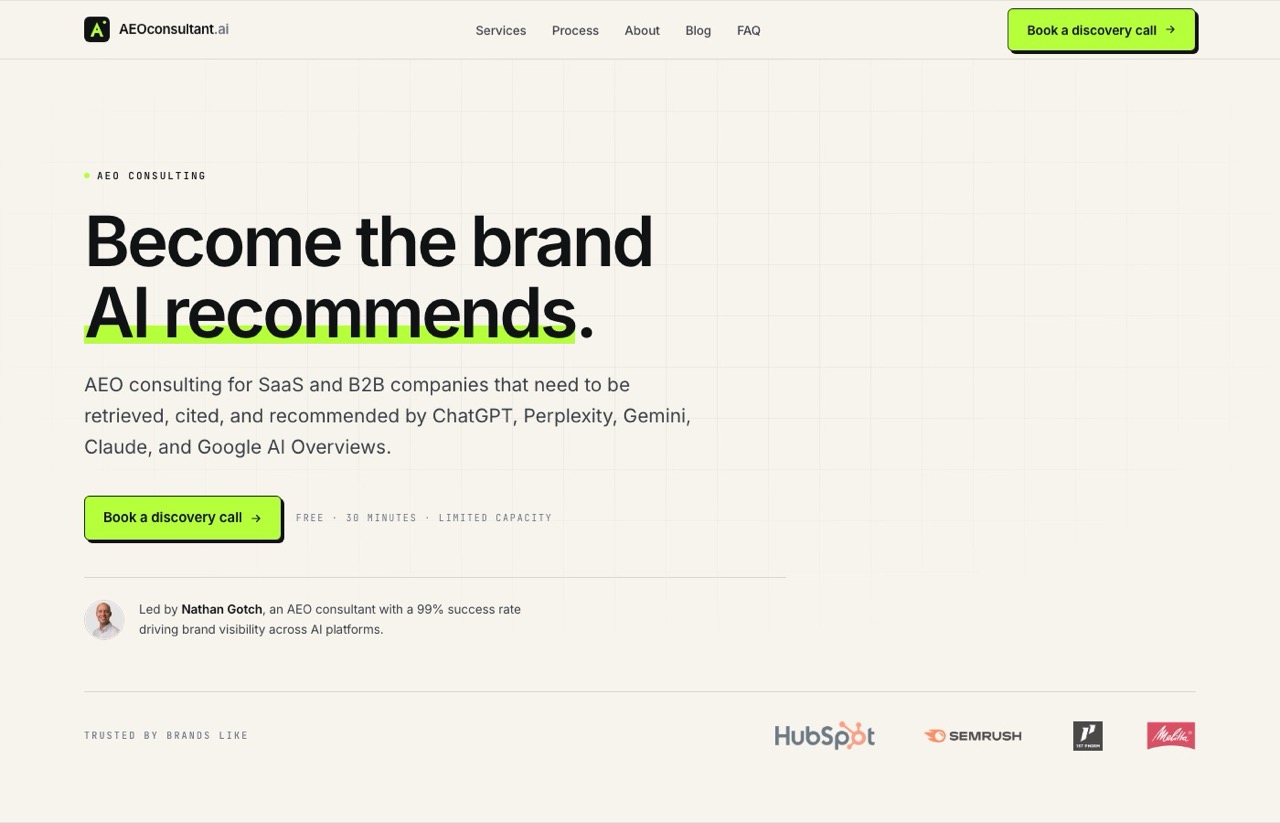
Nathan Gotch is co-founder and CEO of Rankability and has repositioned around answer engine optimization through AEOconsultant.ai, which sells tiered AEO consulting to SaaS and B2B companies. His book AI SEO For Dummies is due from Wiley in September 2026.
He closed the Gotch SEO agency in late 2025 to focus on software and education, so treat that brand as past tense.
Best for: SaaS and B2B teams that want a defined engagement rather than advice.
Read the fine print: The site's headline claims, a 99% success rate and 1,000% visibility growth in 30 days, are self-reported and not independently verified. Engagements are application-gated with no public pricing.
2. Charles Floate (Best for understanding aggressive tactics)
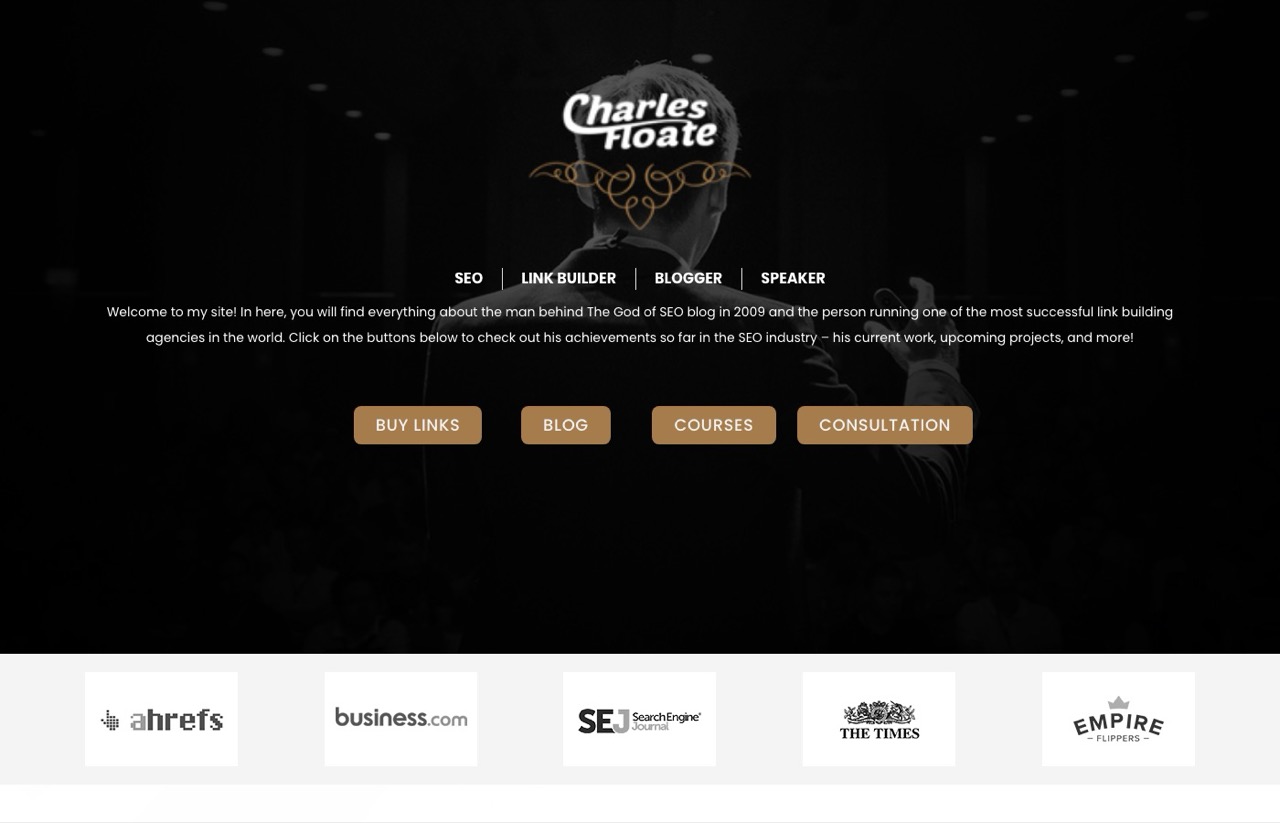
Charles Floate describes his own career as spanning white, grey and black hat SEO, and his product line matches that: parasite SEO, private blog networks and paid links. He ran a Ranking In AI training webinar in May 2026, so the AI search material is real.
He has been penalized by Google twice and wrote both up himself. A pure spam manual action deindexed seven of his public-facing sites, and a link-based penalty in December 2016 demoted his main blog along with 28 network sites.
Best for: Knowing what aggressive operators are doing, so you recognize it.
My honest take: These are tactics I would not run on a business I cared about, and the penalty history is the evidence. Read him to understand what is being done to your SERPs, not to copy the playbook.
3. Ryan Doser (Best for solo operators and small teams)
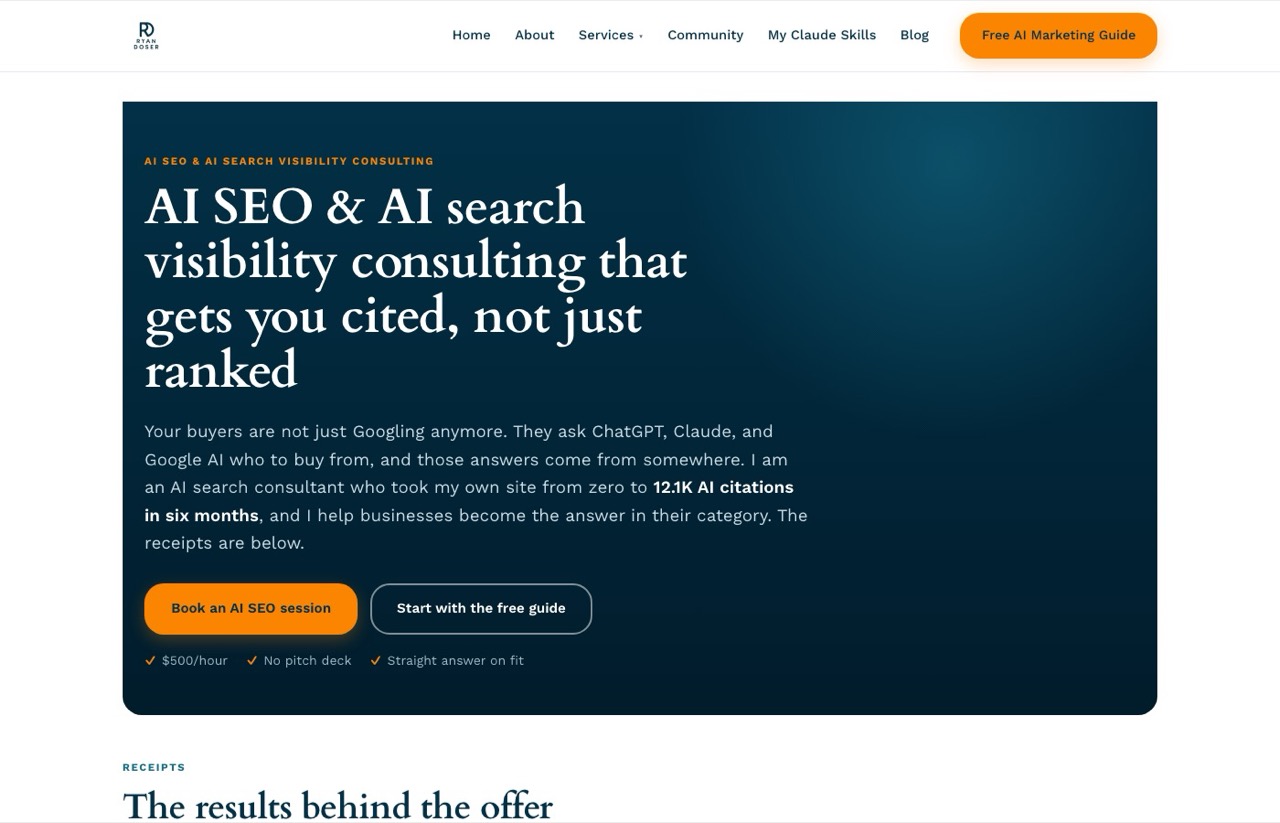
I am an AI-first marketer with over a decade in digital marketing, and I took this site from zero to 12.1K AI citations in six months, alongside 5.77K clicks and 890K impressions in Search Console over that period. Those are my own numbers from my own dashboards, so weigh them the same way you weigh anyone else's self-reported results on this page. I run one-off AI search strategy sessions at $500 an hour rather than retainers, and I got a dental IT client to number one in AI search for their category's head term.
My approach is entity clarity, schema, and content structured so an assistant can lift an answer out of it and name you.
Best for: Founders and consultants who want a roadmap they can run themselves.
Where I fall short: I sell hours, not delivery. If you want a team to run the roadmap for you, I am the wrong call and Seer or iPullRank are better fits. If you want the roadmap without the hours, I packaged the same audit and fix list into my AI SEO System.
4. Wil Reynolds (Best for original AI search data)
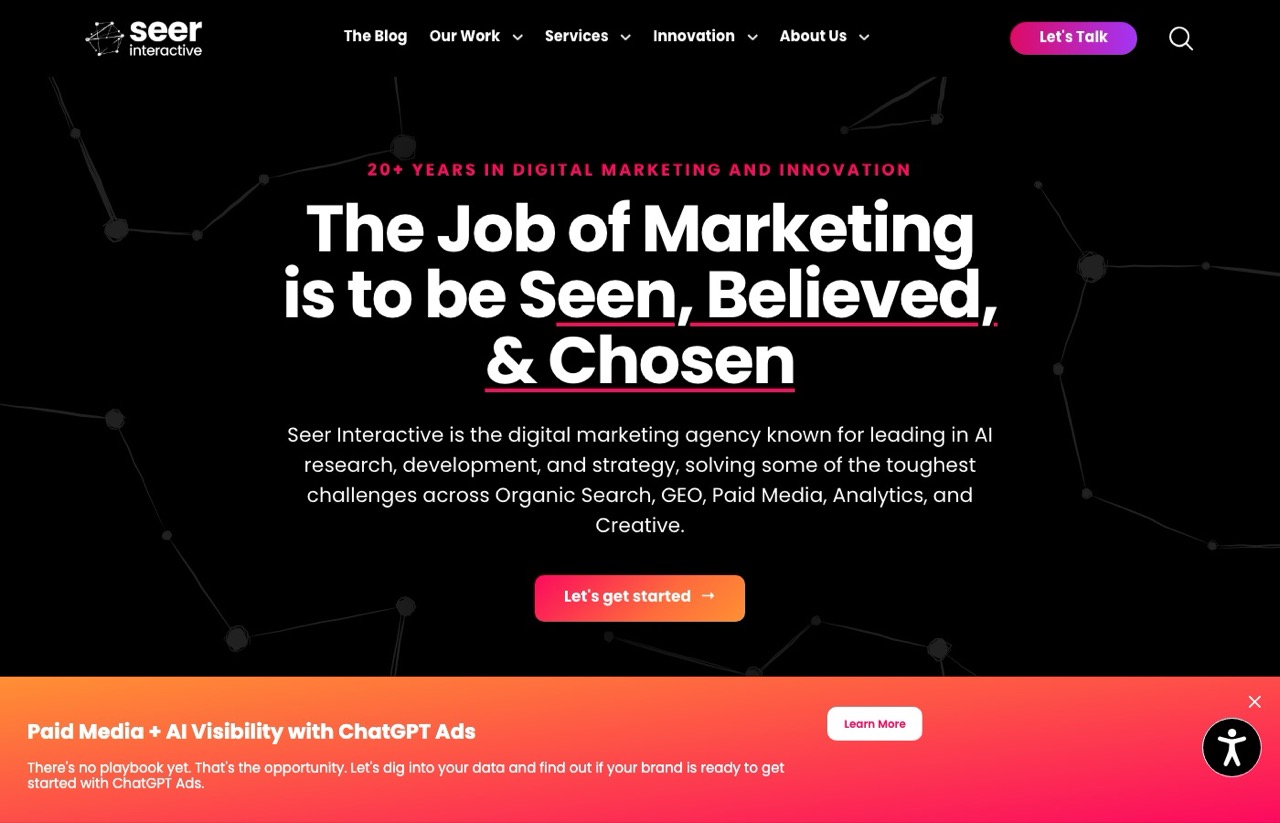
Wil Reynolds founded Seer Interactive in 2002, and Seer publishes some of the largest AI search datasets anyone is sharing publicly. Their GEO Olympics study analyzed over 231,000 LLM responses across seven platforms and found seven-day Wikipedia views were the strongest predictor of LLM visibility.
What earns him the position is that he argues against his own sales pitch. On the No Hacks podcast in April 2026 he called AI visibility a vanity metric and disclosed Seer's own 80% organic traffic loss over two years while pipeline revenue grew. The published research largely backs him on the daily numbers, which I worked through in my Searchable review.
Best for: Marketers who want evidence over opinion.
The limitation: You cannot hire him directly, only Seer, at enterprise pricing. He is here for the culture that produces this research and for saying the unprofitable thing out loud. Seer's research team authored the studies themselves.
5. Mike King (Best for enterprise technical AI search)
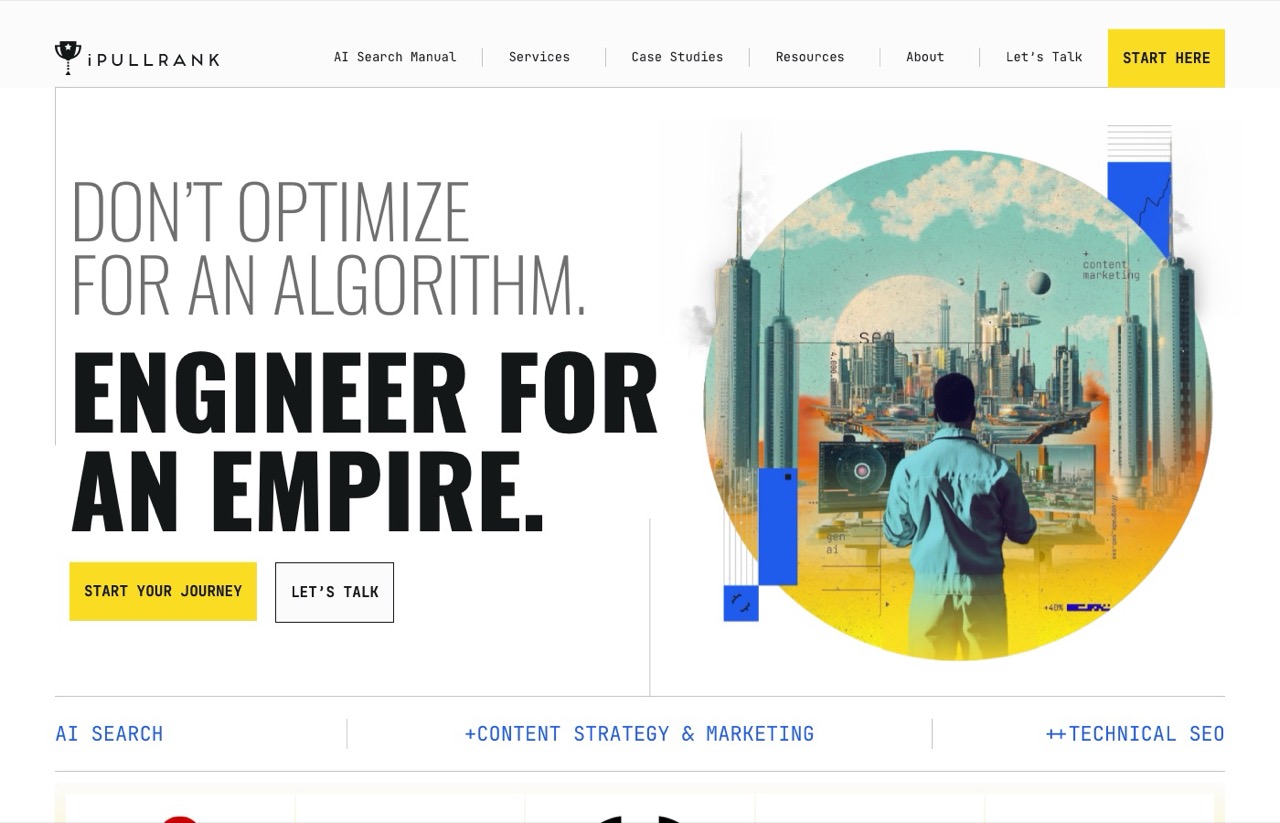
Mike King founded iPullRank and does the most technically demanding work I have found in this space. He named and popularized relevance engineering as an SEO discipline, reframing the job around embeddings, query fan-out and information retrieval rather than keywords. His own framing is careful about this, he calls it "the reinvention I'm calling relevance engineering" rather than claiming he invented the term.
He also verified the 2024 Google Content Warehouse API leak. Rand Fishkin received the documents and King analyzed them. Both published in late May 2024, and Google confirmed the documents were real on 29 May.
Best for: Enterprise teams that need the actual retrieval mechanics, not tips.
Who it is not for: This is the most demanding material in the field and iPullRank is enterprise priced with no public rates. A solo operator will not get through the door or through the reading.
6. Aleyda Solis (Best for free AI search education)
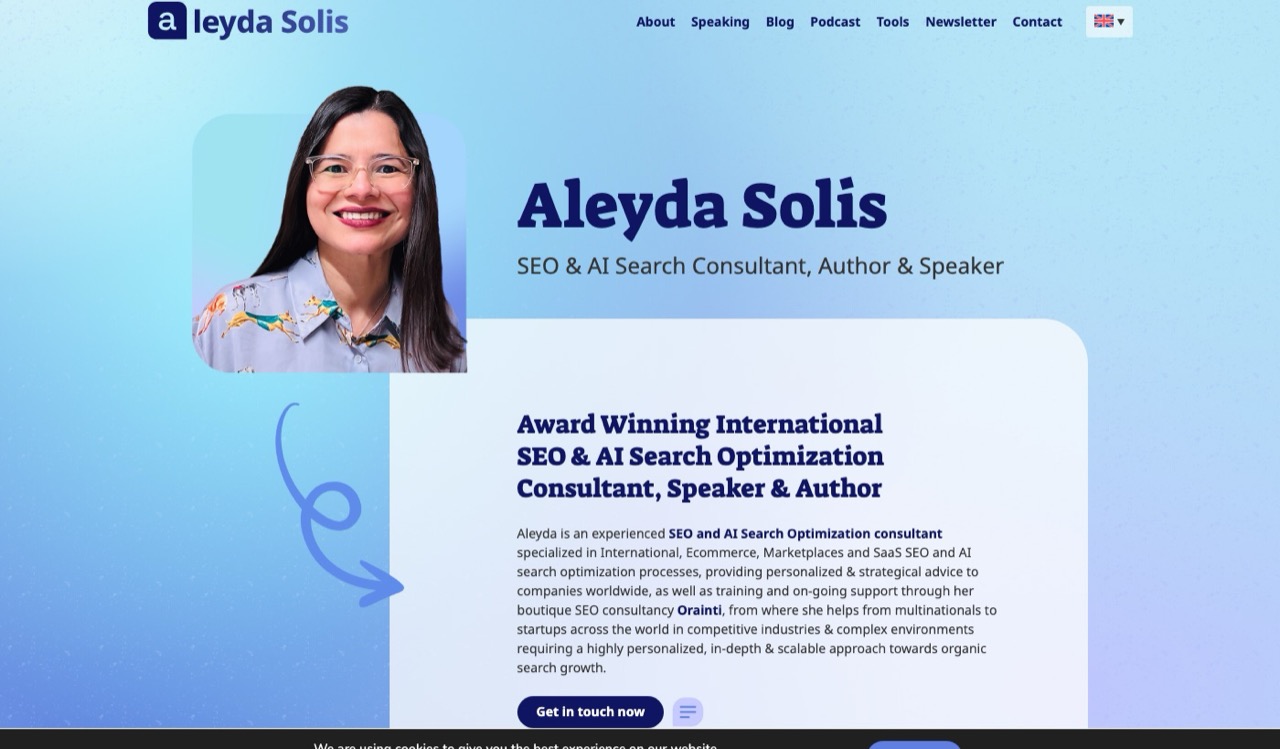
Aleyda Solis runs the boutique consultancy Orainti and launched LearningAIsearch.com in July 2025, a free AI search optimization roadmap covering GEO, AEO and LLMO with no ads and no paid placements. She also publishes SEOFOMO, a free newsletter that goes out every Sunday and claims over 45,000 subscribers on its own signup page.
She gives away more genuinely useful material than most people in this space sell.
Best for: Anyone who wants to learn AI search properly without paying for a course.
The limitation: Capacity is deliberately small and enterprise-leaning. Worth noting that Orainti's own service pages still describe SEO only, so the AI search positioning lives on her personal brand.
7. Andrew Holland (Best for the brand-mentions side of GEO)
Andrew Holland is Director of SEO at JBH, a digital PR agency that now sells GEO as a named service. He spent 17 years as a police officer, including covert intelligence work, before moving into search.
He writes a running Search Engine Land column on GEO, where he makes the case for fame engineering and develops the idea of AI availability, which he credits to Byron Sharp of the Ehrenberg-Bass Institute, who raised it in a comment on one of Holland's LinkedIn posts. His argument is that brand mentions do work in AI search that links alone cannot.
Best for: Brands that need to be talked about across the web, not just tuned up on it.
The blind spot: His thesis is PR-led rather than technical, so it skips schema, crawler access and entity plumbing. He also comes as part of a JBH retainer. Without that budget, automated pitching is the cheap version of the same job.
8. Kyle Roof (Best for on-page testing methodology)
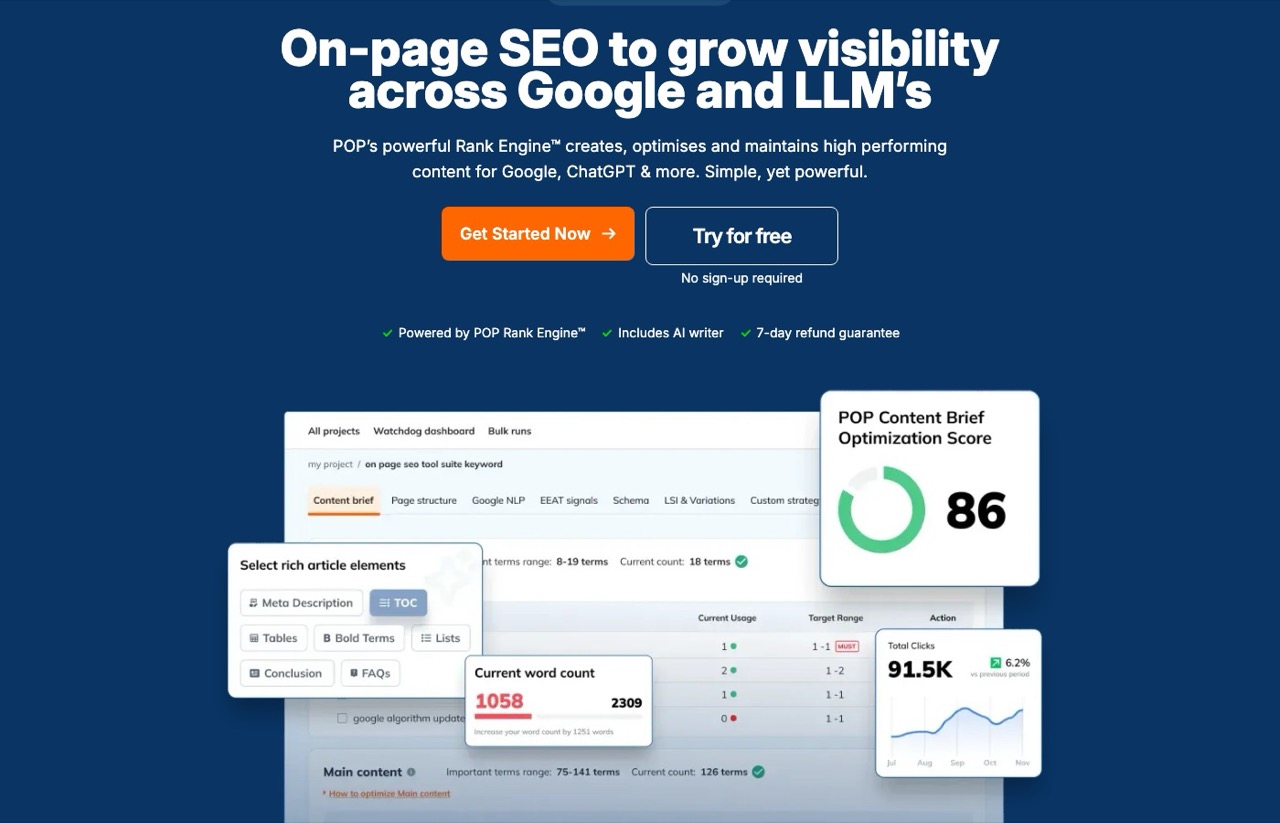
Kyle Roof founded PageOptimizer Pro and holds US patent 10,540,263, granted in January 2020 with co-inventor Dorianne Marie Friend. It covers a method for testing individual ranking variables in isolation, which is narrower than the on-page patent people often describe.
He is best known for the 2018 lorem ipsum test, where he ranked a page of dummy text by placing keywords inside the gibberish. POP now ships an AI visibility tracker, and pricing starts at $40 a month, which puts it just under the dedicated trackers like AIclicks at $59 and well under Profound at $99, though Otterly undercuts all three at $29.
Best for: SEOs who want testing discipline instead of received wisdom.
The blind spot: His edge is reverse-engineering Google specifically, which is a shrinking surface as AI answers take over. His advice also runs through his own tool.
9. Rand Fishkin (Best for understanding zero-click search)
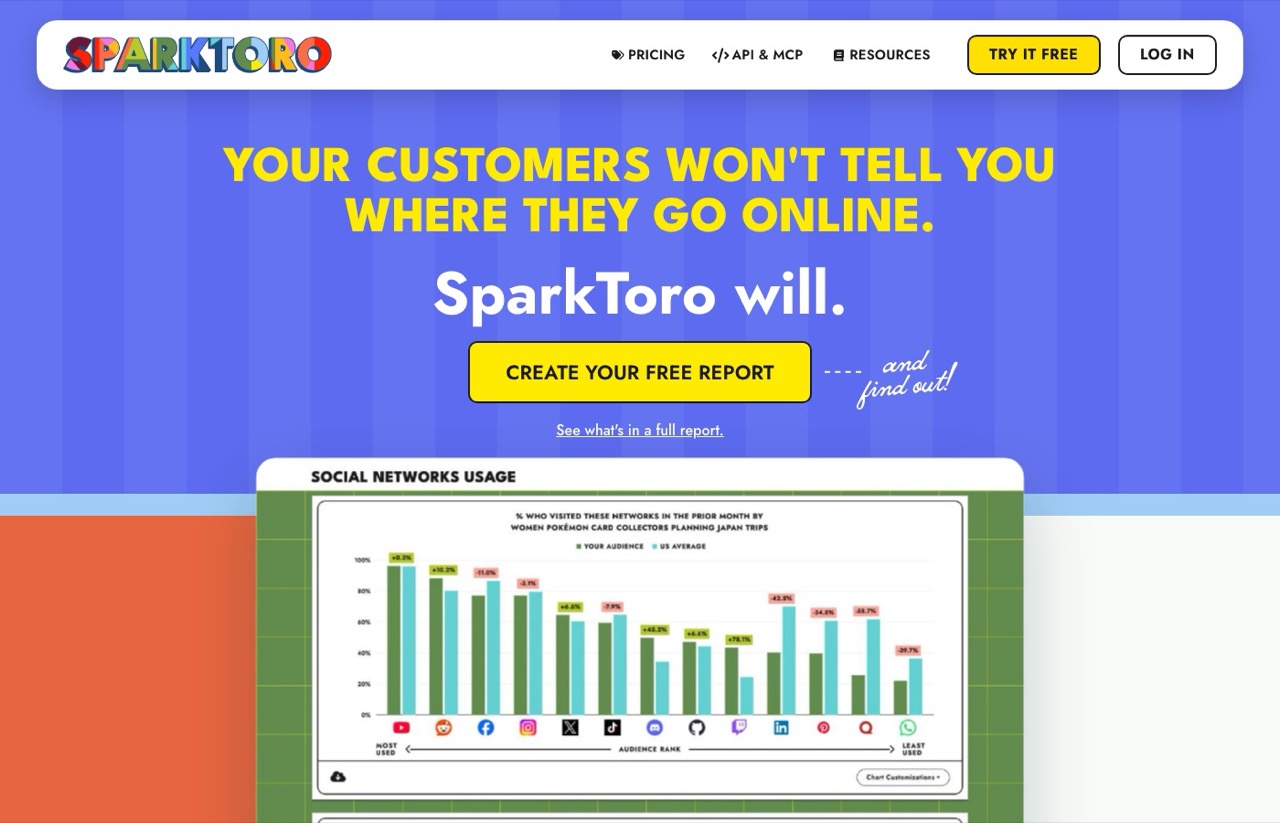
Rand Fishkin co-founded Moz, left in 2018, and now runs SparkToro. His 2026 zero-click study found 68.01% of US Google searches ended without a click in the first four months of the year, up from 60.45% in 2024. His book with Amanda Natividad, Zero Click Marketing, is due in fall 2026. He has also since cofounded the brand monitoring tool Alertmouse, which I broke down in my Alertmouse review.
He is on this list because he measures the collapse in search traffic better than anyone. He is also explicit about his own limits. He left SEO in February 2018 and told Search Engine Land in December 2024 that he had not been in the field for seven years.
Best for: Understanding why your traffic fell even though your rankings held.
Set expectations: He is not available for SEO work and says so plainly. Learn from him, do not try to hire him for this.
10. Kasra Dash (Best for meeting the people doing the work)
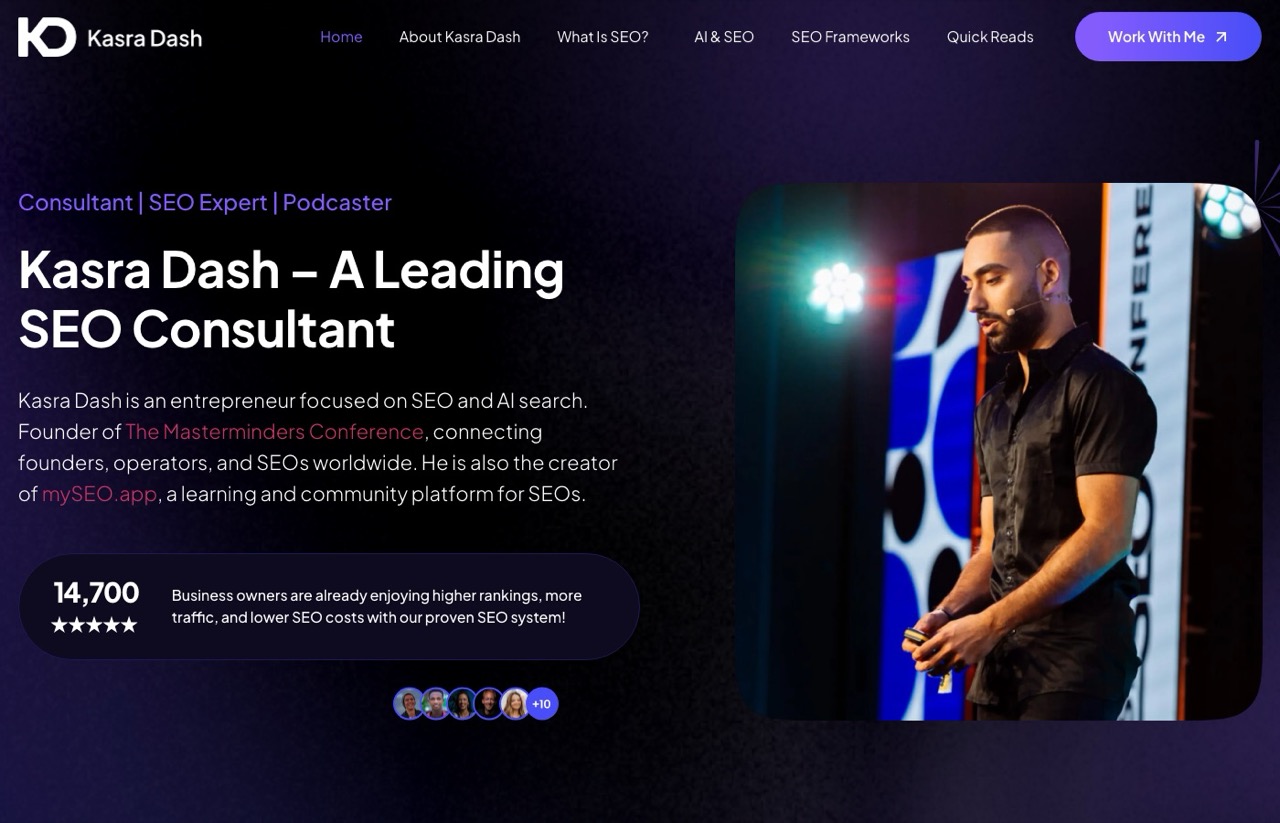
Kasra Dash is a consultant and affiliate site builder who founded The Masterminders Conference, running 24 to 26 June 2026 in Manchester, which advertises 250-plus attendees from more than 25 countries. Andrew Holland speaks there this year, which tells you something about the room.
He also built mySEO.app, a learning and community platform, and works publicly on SEO and AI search.
Best for: Getting in the room with practitioners instead of reading about them.
The limitation: His centre of gravity is link building and affiliate SEO. Compared to the top of this list, there is less published AI search research to point at.
Honorable mentions
Six more worth knowing about, held to the same standard as everyone above. Brian Dean and Koray Tuğberk Gübür are established names whose AI search output is thinner or older than their reputations suggest. Edward Sturm and Sam Dunning are working practitioners publishing real material right now. Dan Petrovic publishes his own AI search research and shows the method behind it. Nesil Ozer is the one I have worked with directly, and the only one here I am vouching for on private evidence rather than published proof.
Same rules as above. Dated work, a link so you can check it, and the limitation stated plainly.
Brian Dean (Best for the argument that AI is not the whole story)
Brian Dean built Backlinko into the most imitated SEO blog on the internet, sold it to Semrush, then built and sold Exploding Topics to Semrush as well. He is now co-founder and CEO of Exploding Topics.
Here is the part other roundups leave out. The GEO and LLM visibility articles on Backlinko today are written by Semrush staff, not by Dean, and the site carries a disclosure saying so. His own recent work argues the opposite of the AI search consensus. His June 2026 video lays out a 2026 playbook built around what he calls search everywhere optimization, spreading across Amazon, YouTube and Reddit, and his July 2026 follow-up is titled "The Biggest Change in SEO (It's Not AI)."
Best for: A credible counterweight if you think the GEO conversation has gotten ahead of itself.
The limitation: His AI search output is thin, with no study carrying a sample size and no named framework of his own, so read him for the counterargument rather than for a GEO playbook.
Edward Sturm (Best for tactical LLM citation methods)
Edward Sturm has the most consistent publishing record on AI search of anyone in this section. Through 2026 he shipped dated pieces on getting shown in LLMs (March), using Bing's AI Performance report to chase citations (February), press releases for LLM visibility (January), and getting AI to recommend you as the expert (June).
The methods are specific and testable rather than conceptual. He shows you how to see which search queries ChatGPT actually runs behind an answer, a Google Analytics regex that isolates traffic arriving from AI tools, and a Search Console filter that treats seven-word-plus queries as a rough proxy for AI-assisted search. He sells AI consulting, and his Compact Keywords course is publicly priced at $1,199.
Best for: Operators who want concrete things to try this week.
The limitation: No original research with a sample size, and his June 2026 piece advises publishing self-promotional listicles that rank you first on your own site, which is the tactic this entire post exists to criticize.
Sam Dunning (Best for revenue-first B2B SaaS SEO)
Sam Dunning runs Breaking B2B, which is an agency and a podcast now approaching 500 episodes. He sells GEO, AEO and LLM SEO as named service lines, and unusually for this field, he publishes his pricing: plans from $4,000 a month on 90-day sprints with no annual lock-in.
His AI search material is current, not retrofitted. Episode 494 in July 2026 walks through his system for ranking SaaS companies inside ChatGPT, Claude and Perplexity. The more useful one is episode 486 from May 2026, where he works through Google's own AI search optimization guide and lands on a deflating conclusion: solid fundamentals still win, and AEO tricks do not. He sells AEO, and he published that anyway.
Best for: B2B SaaS teams who want AI search work tied to pipeline rather than citation counts.
The limitation: He is B2B SaaS specific, and the headline 90-day page-one ranking guarantee is really a growth guarantee tied to agreed milestones, so pin those down on the intro call.
Koray Tuğberk Gübür (Best for the theory underneath topical authority)
Koray Tuğberk Gübür is CEO and founder of Holistic SEO and Digital, and he is the source of the terms "topical authority" and "topical map" as most SEOs now use them. He documents both as his own methodology, built on top of semantic SEO, a term that predates him and that he does not claim.
His AI search framing follows from that theory rather than chasing the trend. In a September 2025 piece he argues topical authority is not about publishing more pages but about reducing the cost of retrieval for a search engine. That is a sharper way to frame why entity-consistent sites tend to get pulled into AI answers, and it gives you something to reason from instead of a tactic to copy.
Best for: People who want the underlying model, not a checklist.
The limitation: His Semantic SEO course lists at $5,000 with a no-refund policy and roughly eighteen hours of lectures before you apply anything, and the case study numbers behind it are self-published rather than independently audited.
Dan Petrovic (Best for the mechanics under AI search)
Dan Petrovic runs DEJAN, a Brisbane consultancy, and he publishes the methodology behind his own research instead of just the conclusions. He presented at Ahrefs Evolve Singapore in May 2026, where Casey Burridge's write-up singled him out for bringing first-party data he collected himself.
He explains mechanics rather than selling tactics. On the Ahrefs Podcast in August 2026 he separates grounding from citation from mention, three things that routinely get blurred together, and argues the linked mention is the one worth chasing. He then walks through a spam classifier built on gzip compression with no machine learning at all, puts it at 90 to 99 percent accuracy on his own test, and tells you to go replicate it yourself.
Best for: Technical readers who want to understand why AI search behaves the way it does, not a checklist to run.
The limitation: Almost everything he publishes is self-run research on his own site, so you are trusting his methodology rather than an independent audit. The figures also shift between formats: the "million queries" line he uses on stage does not match the run counts in his own write-up of that study. His recent output is narrow too, so for classic technical, local or ecommerce SEO, look elsewhere.
Nesil Ozer (Best for AI SEO work that has not gone public yet)
Nesil Ozer is an AI search and SEO consultant in Germany who built a free AI Visibility Audit tool. No signup, three domains per run. It checks AI crawler access for GPTBot and ClaudeBot, your Common Crawl page count, Web Graph domain rank, homepage structured data, and whether your homepage is readable without JavaScript.
It runs on Common Crawl's published datasets rather than a vendor's black box, and he credits the underlying five-check method to Stephen Burns at the Common Crawl Foundation instead of passing it off as his own. His FAQ then volunteers that the crawler test fires from his server rather than OpenAI's real IPs, so a block it finds is a strong signal and not final proof. Most tools in this category tell you the opposite, that their number is the truth.
I am also breaking my own rule here, because this is the one entry on the page I cannot ask you to verify. I have worked with Nesil personally on seven-figure client projects, and he is the real deal on AI SEO. He is the rare case where the private track record is well ahead of the public one, and I am genuinely excited to see where he goes from here.
Best for: A fast, free first look at whether AI crawlers can even reach you, and worth watching closely from here.
The limitation: His public footprint is still one tool and an empty blog, so unlike everyone else here you are partly taking my word for it.
How to judge an AI SEO expert yourself
These are the questions I use before I take anyone's advice on AI search.
- What have they published on AI search specifically, and when? A 2021 SEO post does not count.
- Do they show data, or only conclusions? Ask for the sample size.
- Are they selling the thing they are teaching? That is fine, as long as you know.
- Do they name a limitation of their own approach without being asked?
- Would they tell you not to hire them if you are a bad fit?
That last one is the fastest filter. Anyone who thinks they are right for every business is right for none of them.
If you would rather run the work yourself before paying anyone, the tooling side is covered separately.
Which of these AI search consultants should you actually pick?
Running an enterprise site and need the retrieval mechanics? That is Mike King. Want evidence before you commit budget, read Seer's research first.
Founders and consultants who want a plan they can run themselves are my lane. With no budget at all, start with Aleyda Solis, who has given away more than most people sell. And if you are not yet sure an expert is the role you need, work out whether you want a coach, a consultant or an executive before you shortlist anyone.
For a defined AEO engagement at a SaaS company, Nathan Gotch, or Sam Dunning in the honorable mentions if you want published pricing and a 90-day sprint instead of an application form. For brand mentions and press, Andrew Holland.
Four names here are not hiring recommendations and I am not going to dress them up as such. Kyle Roof for testing discipline, Charles Floate for knowing what the aggressive end of the market is doing, Rand Fishkin for the traffic data, Kasra Dash for the room he puts together. Read them for those reasons.
Ryan's Final Thoughts
The honest state of this field is that almost nobody has been doing AI search long enough to have a decade of results. What separates the people above from the rest of the roundups is that they published something checkable and put a date on it.
I checked every credential here against a primary source, the patent record, each person's own write-up or the published study, and I flagged the self-reported figures as self-reported, including my own. Where a claim would not hold up, I left it out or said what I could not confirm, which is why every honorable mention carries a stated limitation alongside the reason it is worth your time. The single exception is Nesil Ozer, where I vouched for work I have seen firsthand rather than work you can go and check, and I flagged it as exactly that. Judge the rest of the internet's lists by that standard, this one included.
Best AI SEO experts FAQs
Who are the most popular AI search optimization experts?
Mike King, Aleyda Solis and Wil Reynolds are the names that come up most across AI answers and industry roundups, mainly because each has published dated, checkable work on how AI systems pick sources. King named and popularized relevance engineering, Solis runs the free LearningAIsearch.com roadmap, and Reynolds' agency Seer publishes large-scale studies of LLM citation behavior.
How much does an AI SEO consultant cost?
The best public benchmark is Ahrefs' poll of 439 SEO service providers, last updated in August 2024, which put consultancies at $171 an hour and $3,250 a month on average, with $75 to $100 the single most common hourly rate. Published agency rates run higher: Breaking B2B lists plans from $4,000 a month, while iPullRank and Seer do not publish rates at all. I charge $500 an hour for one-off strategy sessions, above that band because it is a single working session with a prioritized roadmap rather than a monthly retainer. Automated platforms sit below the consultancy band and above the tool band, which is where a product like Adaptify at $499 a month lands, or Search Atlas once you add its OTTO automation at $198. Treat all of it as a general SEO benchmark, because no reliable public survey of AI search pricing exists yet.
Which AI is best for SEO?
For the actual work, Claude and ChatGPT are the two most used for content structuring, schema and technical audits. For visibility, the question is different: you want to appear in Google AI Overviews, ChatGPT, Claude, Gemini and Perplexity, and those surfaces disagree with each other constantly. A brand named first by one is often absent from another, so treat each as its own channel.
Is SEO dead or evolving in 2026?
Evolving, and the numbers say how. Rand Fishkin's 2026 SparkToro study found 68.01% of US Google searches ended without a click, up from 60.45% in 2024. Rankings still exist and still matter, but a top position that never gets clicked is worth less than being the source an AI answer names. The job shifted from earning the click to earning the citation.
Do I need an AI SEO expert or a regular SEO?
If your traffic is falling while your rankings hold, that is an AI search problem and a specialist is worth the money. If you have technical debt, thin content or no rankings at all, a regular SEO fixes more for less. AI visibility is built on the same foundation, so paying for GEO work before the fundamentals are in place tends to waste both.
Disclosure: I sell AI SEO consulting, which makes me a competitor to several people on this list. I have no financial relationship with anyone else named here, and nobody paid or was asked to be included. Full disclosure.