
5 Claude Code Hacks From a Top One Percent User (Steal These)
These Claude Code hacks come from Mark Kashef, an AI expert who lives in Claude Code and spends $3,000 a month on tokens. By his own count he went from a top 20% user to a top 10% user in months, and he runs the tool like almost no one else.
Claude Code Hacks Video Guide
I sat down with Mark Kashef, founder of Prompt Advisors, to break down the exact Claude Code hacks he uses to run his business, his YouTube channel, and even his personal life. Watch the full conversation here.
Mark went from a top 20% user in January to a top 10% user by summer, mostly by studying the Claude Code harness after it leaked in March. His point stuck with me: a recent Google study found only 10% of a workflow's results come from the model. The other 90% is the harness. So the skill worth building is not "which model," it is how you drive the tool.
If you want to package your own Claude Code workflows into reusable systems, that is exactly what I teach inside the Claude Code Skills Stack, a decade of marketing experience turned into ready-to-run skills.
Best Claude Code Hacks to Use in 2026
Here are the five hacks Mark walked me through, each one pulled straight from his real workflow.
Hack 1: Plan in ASCII Art Before You Build Anything
Most people jump straight to building. That first version becomes an anchor the model never lets go of.
Mark's fix is to plan in plain text first. He asks Claude Code to draft a page or a system using ASCII art, a rough sketch made of characters, before a single line of real code exists. It lets him move things around and argue with the model cheaply.
"Once you build V0, that is the core foundation for the LLM for that session," Mark told me. "It's going to be very anchored with that V0."
A full first draft of a web page can burn 50,000 to 100,000 tokens. An ASCII sketch costs almost nothing and shows you the generic "vibe code slop" coming before you commit. Mark spends most of his time planning and only hours building. On one enterprise system he wrote 18 versions of a plan file over two weeks, then built 80% of it in two days while he was away from the computer.
The tradeoff is real. This front-loads your time into planning, which feels slow if you are used to prompting and hoping. But once the plan is tight, the building runs almost on its own.
Hack 2: Use Gemini as Your Cheap Workhorse
Claude Code is a strong daily driver. It is not the right tool for every job, and paying Opus prices for grunt work is a waste.
Mark runs a Gemini skill for the heavy, boring tasks. Gemini is weak at coding but strong at multimodal work, and it comes with a fast, cheap million-token context window. He uses it to turn messy PDFs into clean markdown, describe every image and chart on a page, and distill hundreds of documents into a set of high-value "nuggets" before anything touches a database.
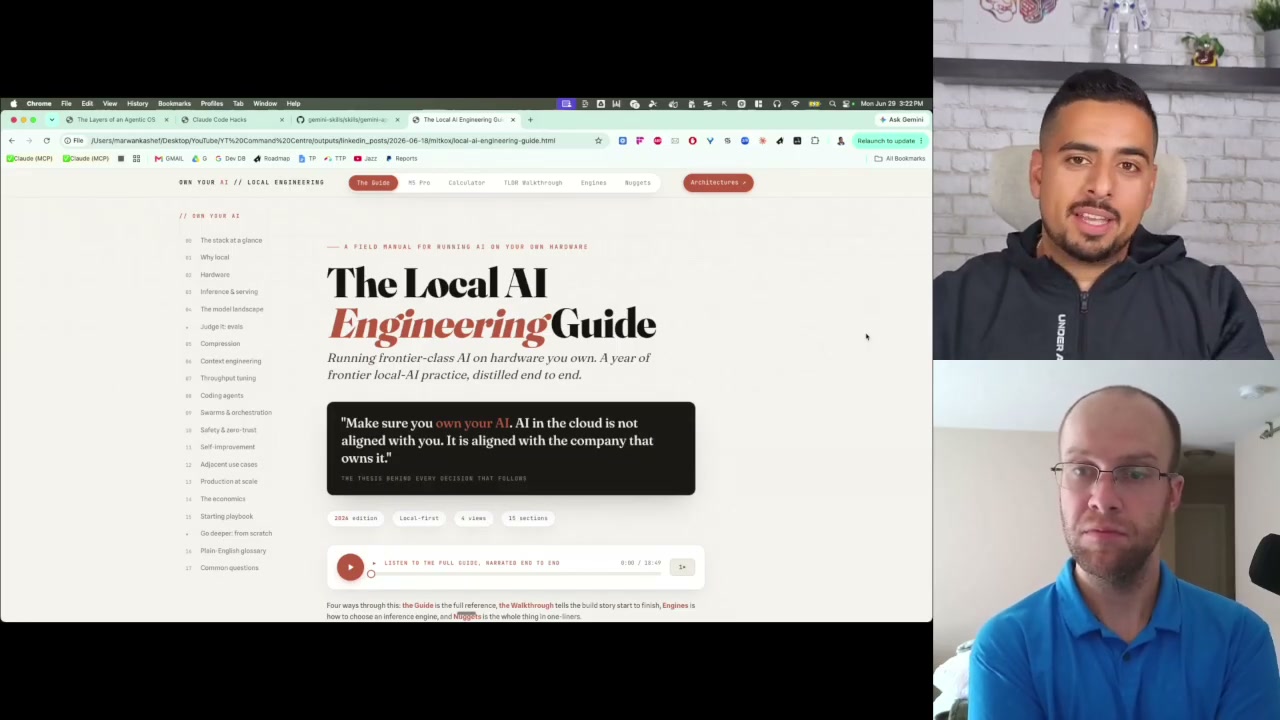
This is how a good AI knowledge base should work. You do not dump raw PDFs into a database and hope for magic. You keep the useful parts and throw out the junk, so you are not paying to store noise. Mark also points Gemini at video (his "date night" skill scores restaurant Instagram posts) and at full-page screenshots that Claude in Chrome sometimes misses. If you care about keeping costs down, my breakdown of Claude Code usage tips to save tokens pairs well with this approach.
Hack 3: Use Loops for Testing, Not for Thinking
Loop engineering is trendy right now. Mark was blunt with me: most of how people use it is a complete waste of time.
Telling Claude Code to "make it better" a hundred times with no context is just spending thousands of tokens to avoid writing a proper plan. People use looping as a substitute for thinking. The loops that actually work give the model a target.
Here is where Mark uses and abuses them:
- Testing a build or an API. Run Claude in Chrome through the full user journey and keep going until it hits zero errors.
- Grading against a rubric. Define what success looks like, then loop until the output meets every requirement.
- Simulating your audience. Before he films, Mark loops a script through personas based on his real YouTube demographics, has them leave the harsh comments a viewer might post, and rewrites until most simulated comments turn positive.
The pattern is always the same. Add context, give it a rubric, and reiterate. A blind loop guesses. A guided loop improves. Watch the cost, though, since a runaway loop can quietly burn thousands of tokens, so cap it with a clear stopping condition.
Hack 4: Let Codex and Claude Code Roast Each Other
Mark calls himself anti-tribal. He does not care whether a tool wins the internet war. He uses whatever serves the task.
About 90% of the time he builds with Claude Code, then has Codex review everything Claude produced. He grabs the free Codex plugin from OpenAI's official GitHub and runs a command called adversarial review, which audits a plan, pulls out its weaknesses, and offers fixes.
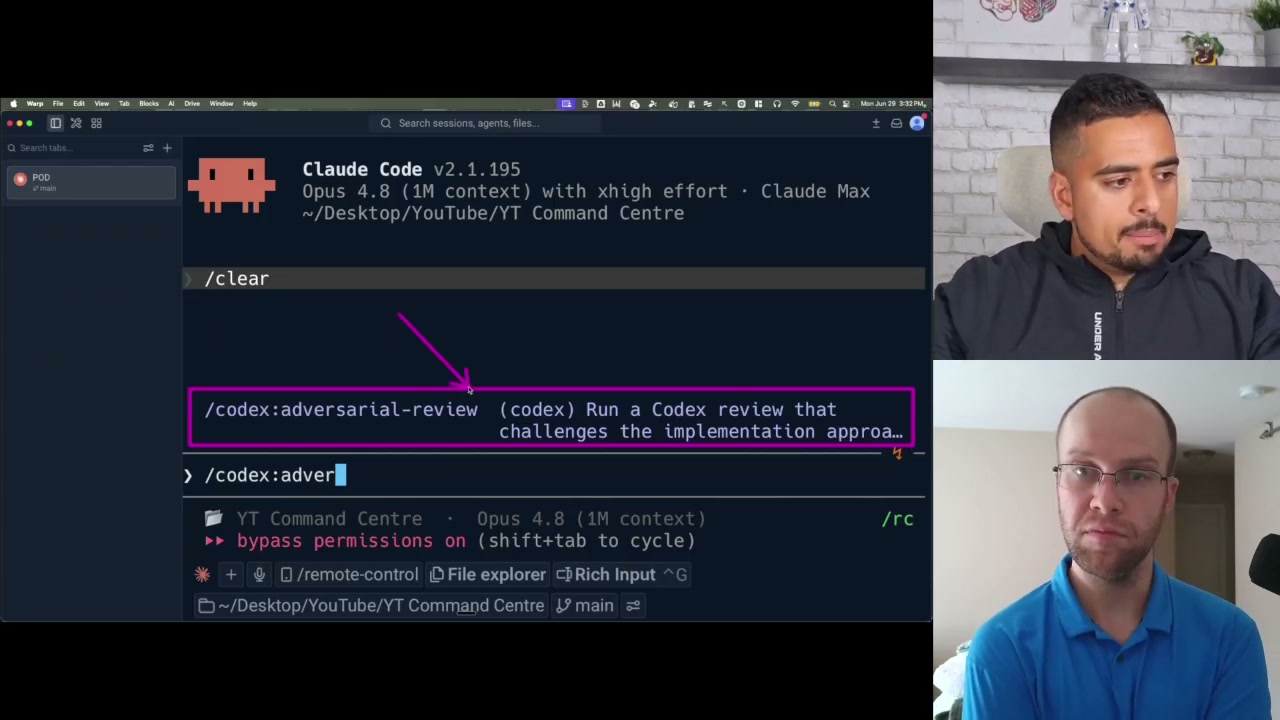
The real trick is not running it once. Mark tells Claude Code to go back and forth with Codex on a loop until nothing is left to flag. By round seven Codex is still poking holes. By version 10, on a $20 Codex plan, he has a plan that is not Fort Knox but is genuinely strong.
He calls this his holy trinity: Gemini as the workhorse, Claude Code as the daily driver, and Codex as the devil's advocate. Adversarial review is one reason to keep both installed, and running Claude Code and Codex together pays off for content work too, since only one of them can make an image. Three models, each doing what it does best, and three of the AI coding tools I rank against each other. If you want to go deeper on that team-of-agents idea, I broke down Claude Code agent teams in a separate post, and workflows are the newer evolution of it.
Hack 5: Turn Boring Explanations Into 3D Visuals
This is the hack Mark called the biggest change he ever made to his YouTube workflow.
He gives Claude Code access to the free Hyperframes CLI, feeds it a GitHub link, and asks it to build animated visuals. A play button that shows how a context window degrades over time hits far harder than a talking head explaining the same idea.
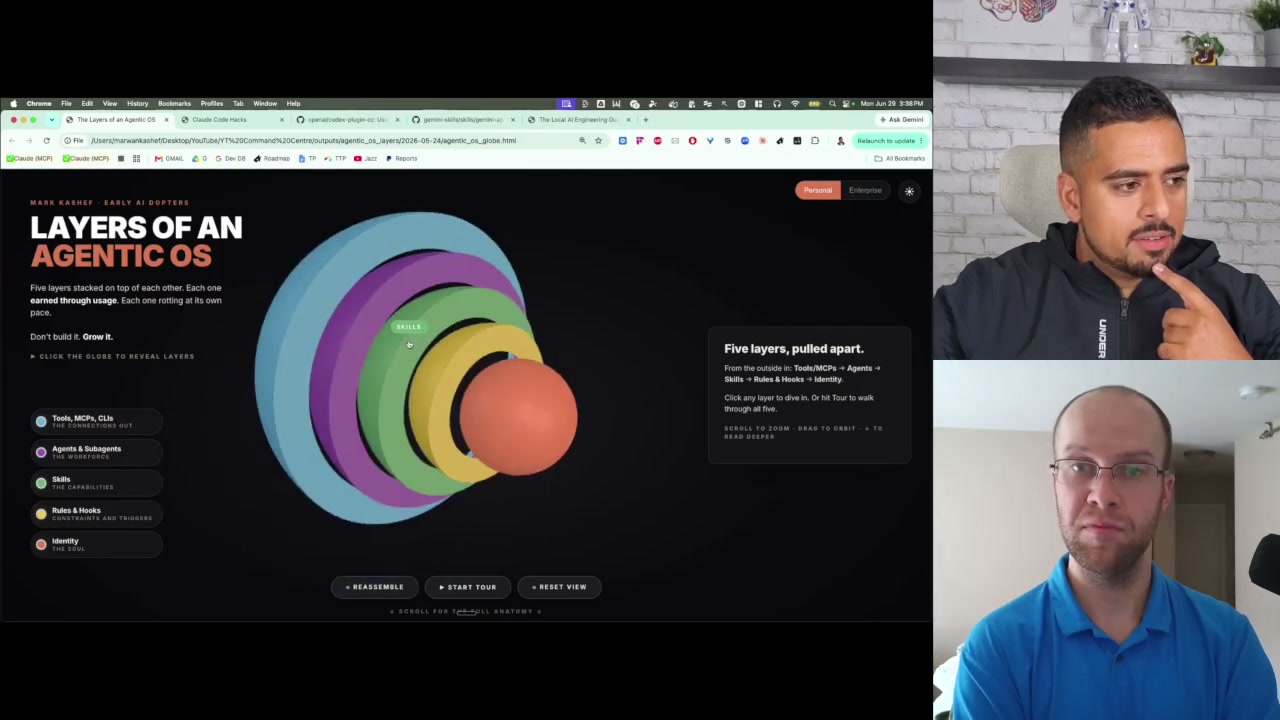
Once he likes a result, he tells Claude Code to crystallize it into a skill so he never has to explain it again. That is why he can spin one up in a minute during a podcast. He uses the same trick for content repurposing, turning a video into shareable B-roll charts, and even made a set of anatomy diagrams to help his wife study for a Pilates certificate.
The honest downside is polish. Mark said it took him a while to get the nice 3D look, so your first pass will not look this clean. The payoff only shows up after you save the winning version as a skill.
One more habit worth stealing sits underneath all of this. Mark saves each session with a custom TLDR command that writes the key decisions to Obsidian and auto-injects them into his next session. Context windows degrade past roughly 300,000 to 400,000 tokens, so he never fills one up. He just hands off and keeps moving. If you are still using Claude like a chatbot, my guide on Claude AI vs Cowork vs Code shows where that operator mindset starts.
Ryan's Final Thoughts
Mark's biggest warning was about money, not tools. The cheap, subsidized token era is ending, and he thinks token budgets will land on the CFO's desk within a year. His advice was simple: pay for the best AI to learn how it works while it is still cheap. As he put it, it has never been a better time to become mediocre at this, because a few months of real practice will leave you wishing you started sooner. He shares more of this thinking on his YouTube channel and inside his Early AI Dopters community.
Claude Code Hacks FAQs
What are the best Claude Code hacks for beginners?
Start with planning before building. Ask Claude Code to sketch your idea in ASCII art or plain text first, argue with it, then build once you like the direction. This one habit saves the most tokens and produces better results than one-shot prompting. Plan with Opus, then run the build with a cheaper model like Sonnet.
Do I need the $200 Claude Max plan to use these Claude Code hacks?
No. Mark runs a Max plan and spends thousands on extra tokens, but the core ideas work on any plan. Planning in plain text, using a cheaper model for grunt work, and giving loops a clear rubric all save money. Heavier hacks like dynamic workflows spend one to two million tokens per run, up to three million on the most intensive tasks, so use those only when the job justifies it.
How does Mark Kashef use Gemini with Claude Code?
He treats Gemini as a cheap workhorse for multimodal tasks. Gemini converts PDFs to clean markdown, describes images and charts, analyzes video and screenshots, and distills large document sets into high-value summaries. Claude Code then works from that clean, pre-processed input, which saves tokens and improves accuracy.
What is Codex adversarial review in Claude Code?
It is a command from the free OpenAI Codex plugin that audits a plan, exposes its weaknesses, and suggests fixes. Instead of running it once, you tell Claude Code to loop back and forth with Codex until no red flags remain. The result is a much stronger plan before you spend tokens building.