
Which AI Model Picks the Best NCAA March Madness Bracket?
Your AI March Madness bracket could look completely different depending on which model you ask. I tested five of the top AI models head-to-head to find out which one makes the smartest picks for 2026.
How AI March Madness Bracket Predictions Actually Work
Most people open ChatGPT, type "fill out my bracket," and call it a day. That approach misses the point entirely.
I wanted to go deeper this year. So I built a March Madness predictor skill inside Claude Code that factors in KenPom efficiency ratings, current form, injuries, player availability, coaching experience in March, travel logistics, game locations, NBA draft prospects, and historical seed performance.
Then I ran that same skill across five different AI models through OpenRouter's API. Same prompt. Same data inputs. Five different sets of picks. The goal was simple: remove my own bias and let the models compete against each other.
The 5 AI Models I Tested for March Madness
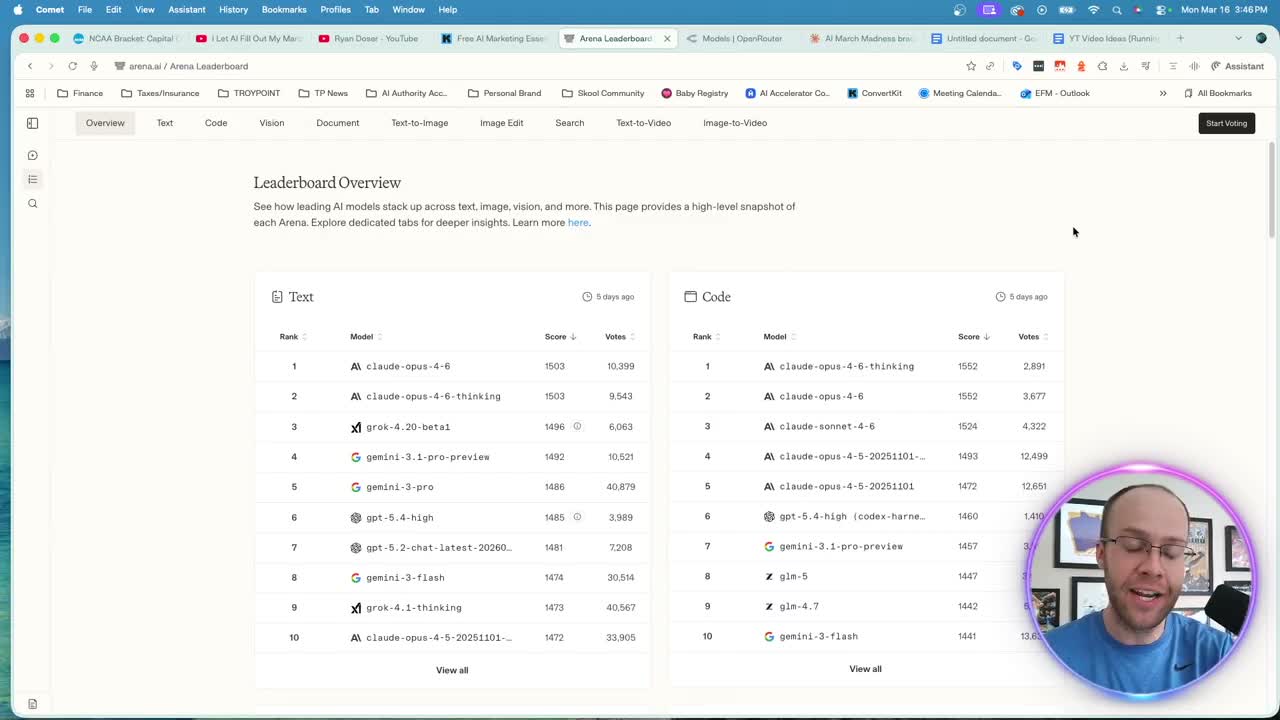
Here is a breakdown of every model I put through the bracket gauntlet. I pulled from the top of the LMArena leaderboard to pick the smartest model from each company.
- Claude Opus 4.6 (Anthropic)
- GPT-series latest (OpenAI)
- Gemini (Google)
- Grok (xAI)
- DeepSeek (DeepSeek)
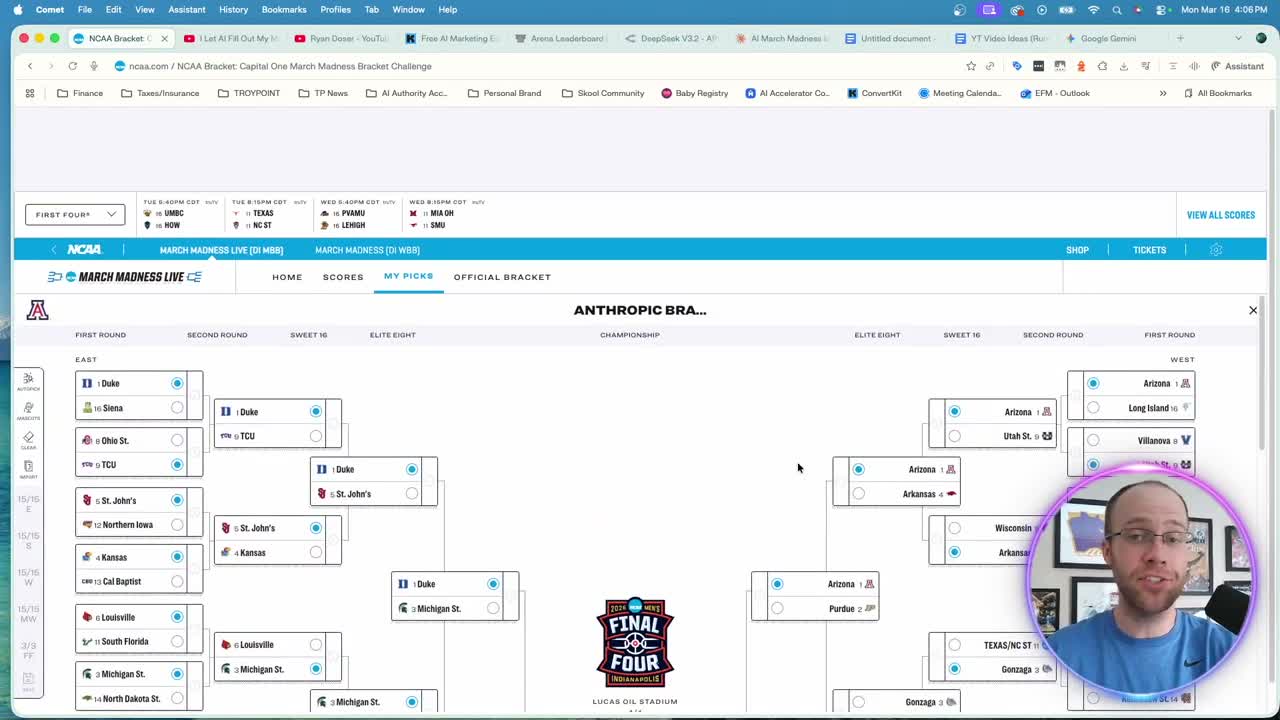
Each model received the identical predictor skill file. I created a separate markdown file for every model's picks, covering each round from the Round of 64 all the way to the national championship. Then I filled out actual brackets on NCAA.com with each model's results.
Who Did Each AI Model Pick to Win It All?
Three out of five models picked Arizona to cut down the nets. That alone tells you something about how similarly these AI NCAA tournament bracket tools process matchup data.
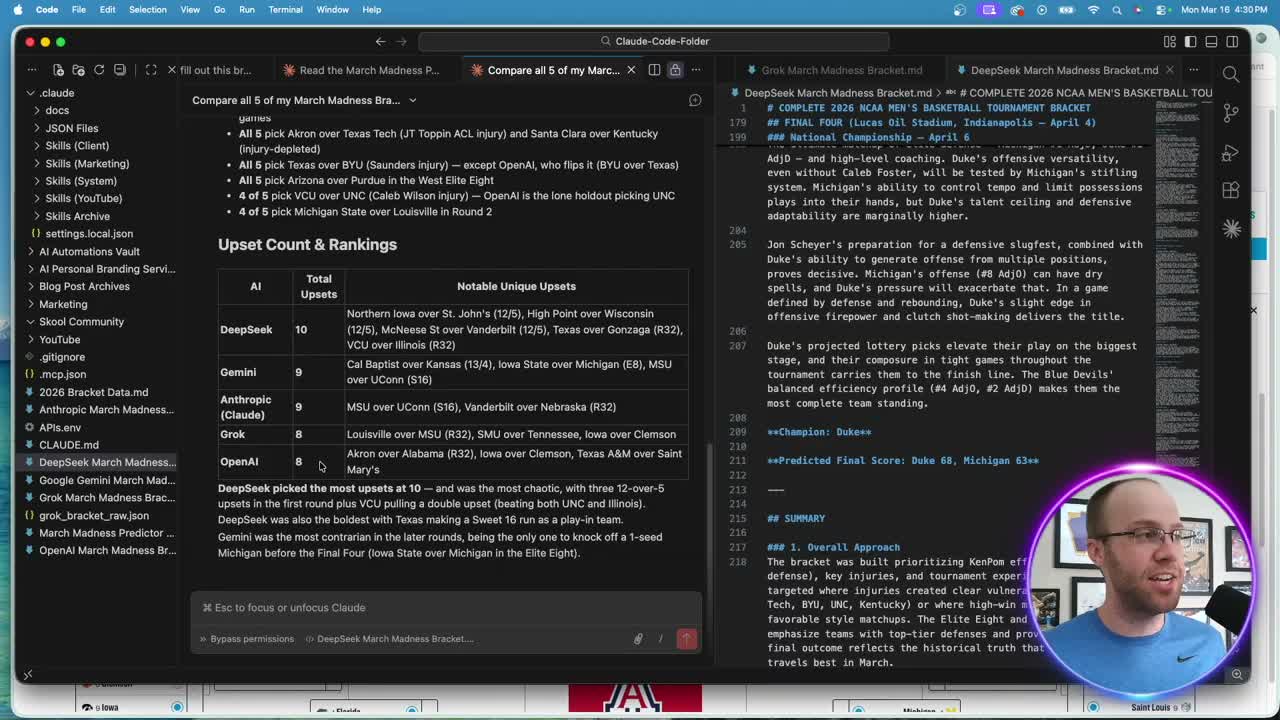
Claude Opus 4.6 had Arizona beating Duke 67-62 in the title game. OpenAI and Gemini landed on nearly identical brackets, also picking Arizona. Grok went with Michigan, which was the boldest pick of the group. And DeepSeek picked Duke to win it all, with the most chaotic bracket by far.
DeepSeek Had the Most Upsets by Far
If you want chaos in your March Madness AI picks, DeepSeek is your model. It picked every single 12-over-5 upset in the tournament. Northern Iowa over St. John's. High Point over Wisconsin. MCN State over Vanderbilt. Texas over Gonzaga.
The other four models played it safe. Claude, OpenAI, and Gemini produced what bracket nerds call "chalky" results, meaning they heavily favored higher seeds. Almost every Final Four slot across those three brackets went to a one or two seed.
That makes sense when you think about it. AI models trained on historical data will gravitate toward patterns. And the pattern says higher seeds win more often. DeepSeek either weighted different variables or interpreted the skill file with more risk tolerance.
One thing almost every model agreed on: Michigan State over UConn in that 3-vs-2 matchup. That kind of consensus across five separate models is worth paying attention to.
How to Use AI for Your Own March Madness Bracket
You do not need Claude Code or OpenRouter to get started. But having a structured prompt makes a massive difference versus just asking "who wins?"
Here is what worked for me:
- Give context beyond stats. Injuries, coaching history in the tournament, and travel distance all matter. Feed that into your prompt.
- Compare multiple models. One model gives you one perspective. Three or five give you consensus picks and outliers worth investigating.
- Use AI as a researcher, not a psychic. These models spot patterns in data. They cannot predict buzzer-beaters or freshman breakout performances.
- Build a reusable skill or prompt. I created a Claude Code skill that I can run year after year. The structure stays the same even as the bracket changes.
If you have tried different AI tools for other projects, the same principle applies here. The model you choose shapes the output you get.
What the AI Models Got Wrong (and Right)
No AI model is going to nail a perfect bracket. The NCAA tournament exists because unpredictable things happen. A cold shooting night. A last-second foul. A 15-seed that just will not go away.
But AI March Madness predictions do give you a data-driven starting point. The consensus picks (Arizona, Michigan State advancing) carry more weight than any single expert's gut feeling. And the outlier picks from DeepSeek might be exactly the Cinderella upsets that win your office pool.
I will be tracking all five brackets through the tournament and comparing final results. The real test is not which model sounds smartest. It is which one gets the most games right.
Ryan's Final Thoughts
Testing five AI models against each other for March Madness bracket predictions was one of the more fun experiments I have run this year. The biggest takeaway: AI models are more alike than different when it comes to picking favorites. The real value shows up in how they handle toss-up games and potential upsets.
If you want to follow along with my bracket results or grab the free Claude Code predictor skill, check the video description. And drop your picks in the comments. I want to know which AI model you are trusting with your bracket this year.
AI March Madness Bracket FAQs
Can AI accurately predict March Madness brackets?
AI models spot statistical patterns and historical trends better than most humans. But they cannot account for random events like injuries during games or clutch performances. Use AI as a research tool to inform your picks, not as a guaranteed oracle.
Which AI model is best for March Madness predictions?
In my 2026 test, Claude Opus 4.6, OpenAI, and Google Gemini all produced similar "chalk" brackets favoring higher seeds. DeepSeek picked the most upsets. The best approach is comparing multiple models and looking for consensus picks.
How do you use AI to fill out a March Madness bracket?
Give the AI model context beyond basic stats. Include KenPom ratings, injury reports, coaching tournament history, and travel logistics. A structured prompt or skill file produces far better results than a vague "pick my bracket" request.
Is using AI for bracket predictions considered cheating?
Not at all. AI is just another research tool, similar to reading expert analysis or checking Vegas odds. Most bracket pools have no rules against using technology. The tournament is still unpredictable enough that AI will not guarantee a perfect bracket.
What factors should AI consider when picking March Madness games?
Strong AI bracket predictions factor in efficiency ratings, current win streaks, defensive vs. offensive matchups, coaching records in March, player injury status, historical seed performance, and even travel distance to game locations.