
ChatGPT Pro vs Claude Max: Which $100 Plan Is Worth It?
Six months ago I wrote a post about leaving OpenAI, and Claude ran nearly all of my work.
Today my stack is split. ChatGPT Pro vs Claude Max stopped being a question about which model is smarter and became a question about how much of the good model you actually get to use before your plan cuts you off. That shift is why I quietly moved a chunk of work back to OpenAI over the last few weeks.
I'm not deleting anything. I still pay Anthropic, Fable is still the best model I own, and what I said six months ago was true when I said it. But the math changed, so I changed with it.
Since then I ran GPT-6 Astra and Claude Fable 5.1 head to head on three real jobs: a landing page that already makes money, a local service brand built from one prompt, and 17 scanned pages turned into long-form writing. Here is the full breakdown, starting with the three tests and every screenshot from them.
Short version: Fable wrote better, Astra delivered more per prompt, and the plan math decided it rather than the models. The rest of this post is why.
I Ran Astra and Fable Head to Head on Real Marketing Work
Before any of the plan math matters, you need to know whether the model you're rationing is worth rationing. So I put Astra and Fable 5.1 on the same three jobs, with the same prompts, on the same afternoon.
The results are in the video above, where I went through them with Aaron Makelky. Aaron is an AI consultant who pays for no Anthropic subscription at all, reaching Claude models through OpenRouter and Cursor instead, and he is the same person I went through Grok Bot's rate limits with a week earlier. He pushed back hard enough to change how I'd answer the buying question, and we landed in different places, which is the useful part.
Test 1: Redesign a Landing Page That Already Makes Money
Every time a new model ships I give it the same first job, because I have a page with real revenue attached to it and I know exactly how it performs. My Claude Code Skills Stack page has brought in over $20,000. The current version was built by Opus 4.8.
The prompt was deliberately thin. I gave each model the live URL and said: make a better landing page designed to get more conversions. Nothing about brand, nothing about colors.
Fable 5.1 stayed on brand almost perfectly.
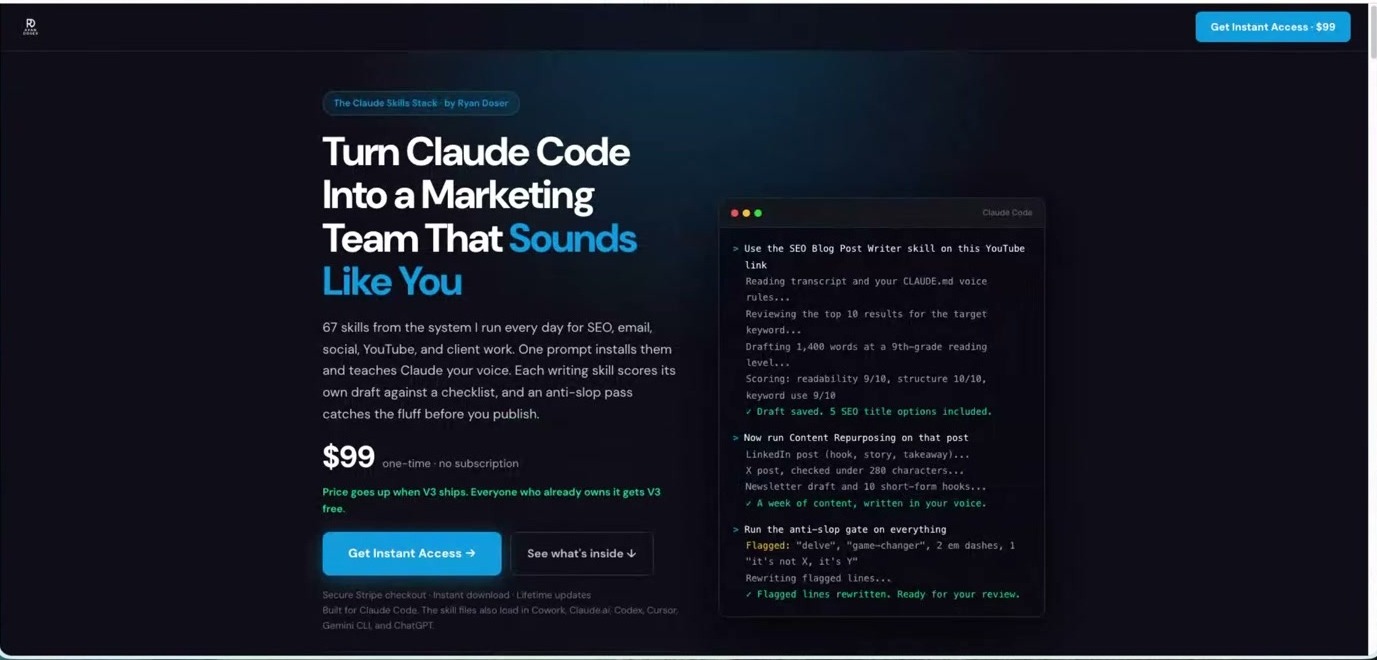
Aaron picked out the specifics: it toned down the gradient, which is normally something you get unless you prompt against it, pushed more contrast into the CTA buttons, and made the testimonial cards more visually appealing. Nothing crazy, but the big takeaway is that it truly stayed on brand and iterated the original rather than replacing it, which is what you want when brand consistency matters.
Astra ignored my brand entirely.
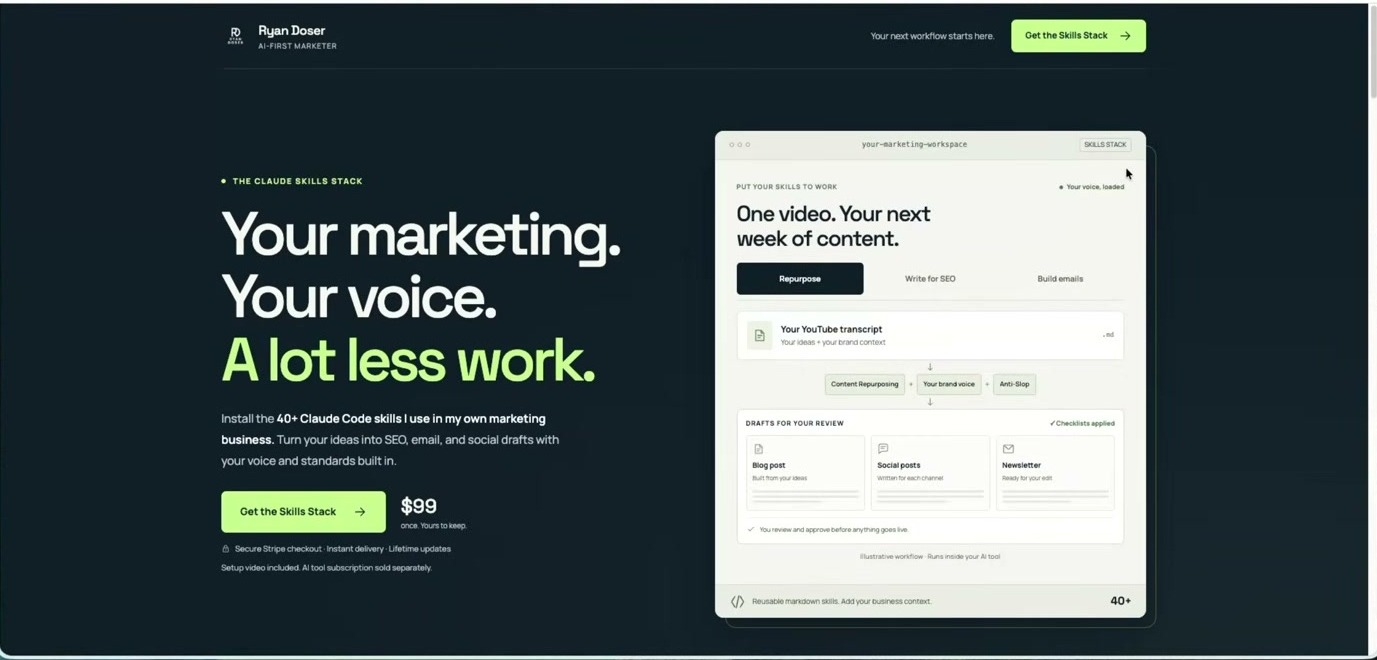
Different colors, my logo and full name added at the top, and a completely different approach to the product widget. It also came back noticeably shorter and more condensed than Fable's version.
My honest reaction was that I liked it. Aaron went further and argued the plainer version would convert better, on the theory that a visitor is not grading your gradient, they are deciding whether to click. Neither of us has numbers on that yet, and he was the first to say the only way to settle it is a test.
That is the part worth taking away. If I am a plumber in Des Moines, I do not care whether my landing page is an award winner. I care whether the phone rings. Off-brand is a tradeoff I will take if the numbers justify it, so this one goes into an A/B test rather than straight into production.
Test 2: Build a Local Service Brand From One Prompt
The second test was messier on purpose. It has been raining hard in Des Moines and basements have been flooding faster than the plumbing companies can keep up, which made me wonder whether there was a rank-and-rent opportunity sitting there.
So I gave both models one paragraph: I'm starting a local service business for flooded basement cleanup and restoration, give me a company name, ICP, brand guide, and a front-end homepage design. I named the city and pointed at a reference site. That was the entire brief.
I ran them side by side in VS Code, Claude Code in one pane and Codex in the other. Worth saying plainly because it confuses people: you do not need either company's desktop app to use these plans. Both run inside one IDE, which is how I actually work.
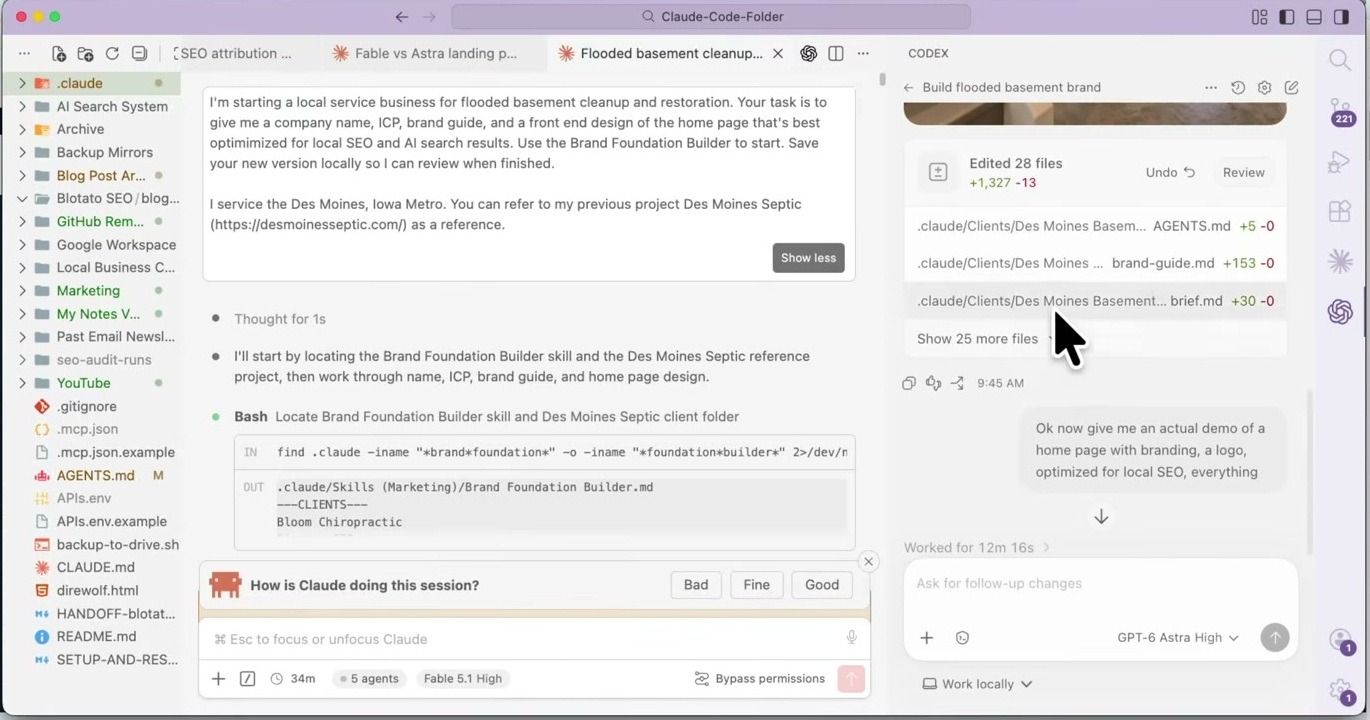
Fable gave me a homepage.
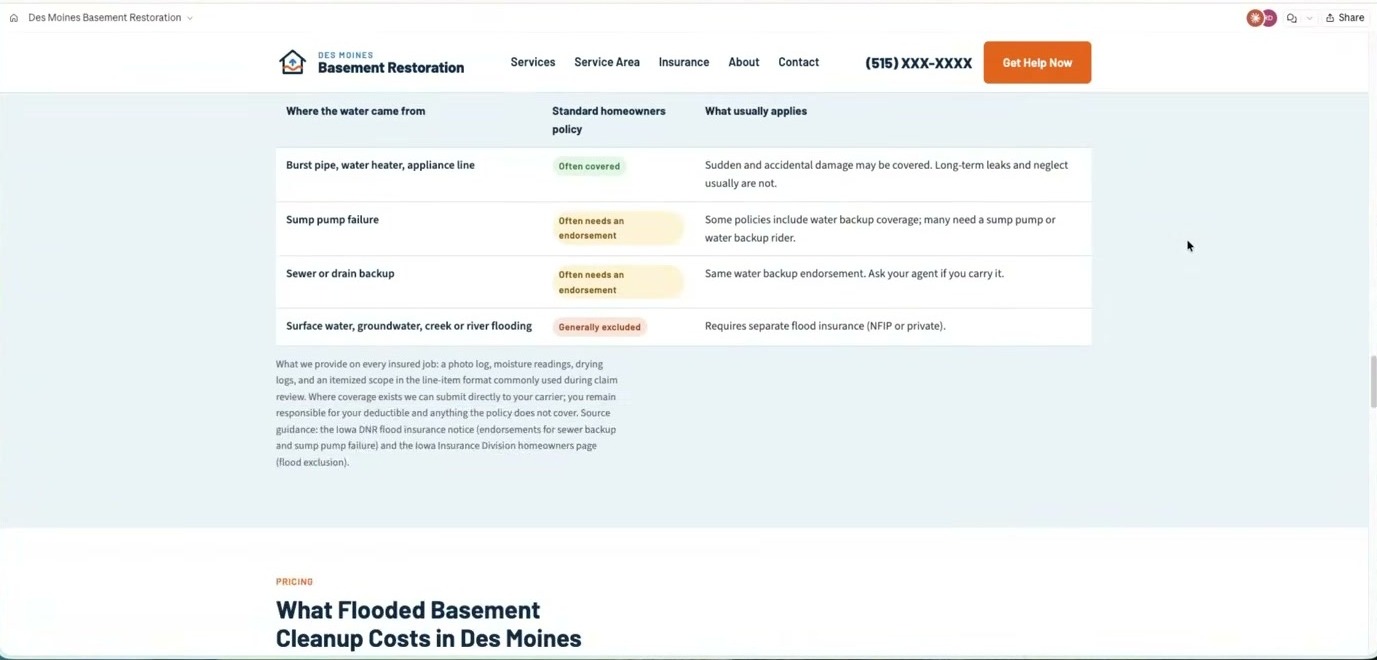
My read was that it was fine and forgettable. Placeholder images where the photos should be, a logo I would not keep, and nothing that would embarrass you in front of a client. Serviceable.
Aaron was harsher, and he caught details I had skimmed past: an orange eyebrow label too low-contrast to read, five steps crammed above the fold, and colored pills whose text centering was visibly off. His words were that it looked vibe-coded and low-effort, and that a plan charging $100 or $200 a month should nail that on the first pass rather than making you go back and say "now fix this." Looking at it again, he is right and I had graded it on a curve.
Astra returned something closer to a starter kit.
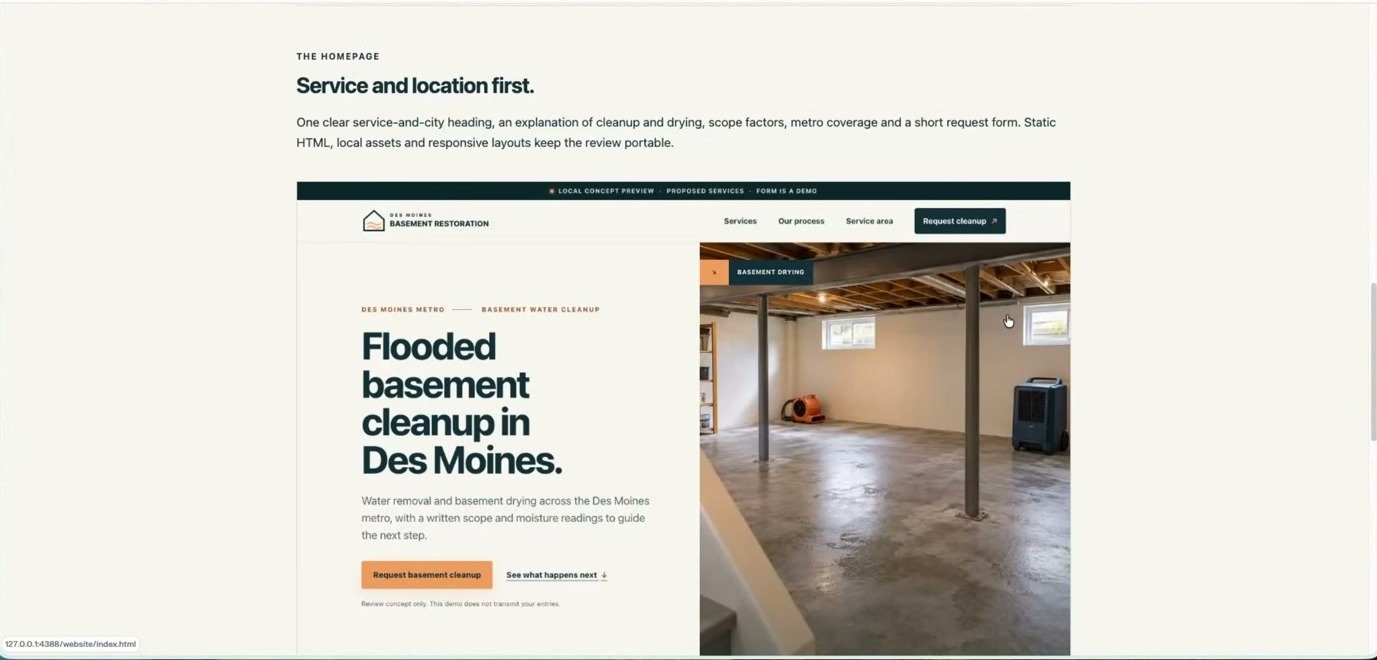
It gave me the brand concept, a full brand guide with a named color palette, the homepage, and a hero image it generated itself with ChatGPT Images, without being asked. Then it produced a second design iteration nobody requested. Aaron's read was that the palette looked more refined and modern than Fable's harsh orange and navy, and that the named "action orange" actually carried through into the CTA button and the headline. A toolkit for building the site rather than a site with placeholders in it.
That cuts both ways, and I want to be fair to Fable here: this was a bare-bones prompt with almost no context. Given a real harness with skills and brand foundations behind it, Fable produces excellent work. I rebuilt ryandoser.com with a combination of Opus 4.8 and Fable 5, and I still like that design. A one-paragraph prompt tests how much a model does unprompted. It does not test its ceiling.
Test 3: 17 Scanned Pages, One Long-Form Draft
Aaron's own test is the one that reframed the cost question for me, because it is the only one that measured something other than output quality.
He took 17 handwritten pages scanned into a PDF and asked for a long-form piece built from his actual ideas. Three things stacked in one job: ingest the PDF, OCR handwriting accurately, then write at length without inventing filler.
The result matched what I had seen all afternoon. Fable won on quality and it was not close: better structure, and a genuinely good hook nobody asked it for.
Then the other half. Fable was slow enough that just reading the PDF took longer than Astra needed to finish the entire job end to end. It burned more tool calls and more credits to get there.
Which surfaces a mistake I see constantly in these comparisons. People compare price per token and stop. Compare price per task instead, because a model that burns fewer tokens and finishes faster can be cheaper on the actual job even at the same headline rate. You do not care what a token costs. You care what the landing page cost.
That matters more here than usual, because the headline rates are identical. I assumed Fable was the pricier model and checked it while writing this up: both Fable 5.1 and GPT-6 Astra run $10 per million input tokens and $50 per million output tokens at standard rates. Same number on both sides.
So at standard rates the sticker price is a wash, and what separates them is how many tokens each one burns to finish and how long you wait. On the PDF job that gap favored Astra clearly. Both halve those rates for batch work, and Astra adds a few modes Fable does not have, so name the mode before you quote either one a price.
What Actually Changed at OpenAI
OpenAI has made one of the great comebacks in this space. Three things moved, and none of them are the "INSANE update" kind.
GPT-6 Astra Landed on the Pro Plan
Astra reached general availability on September 4. The part most write-ups get wrong: GPT-6 Pro, powered by Astra, sits in the main chat only on the Pro plans, Business Premium and Enterprise. Plus users get Astra inside ChatGPT Work and Codex, not in the standard model picker. So the flagship is genuinely what the $100 buys.
GPT-5.6 Sol Got Good Enough for Content Work
Sol is the model I use most now, and it does the unglamorous jobs well: drafting, editing, tearing a draft apart, arguing with my own angle. My read is narrow and about one job. For drafting and editing marketing content, Sol got good enough that I stopped reaching for Opus by reflex.
The metering point is not just mine, either. Authority Hacker built their September 4 episode around the same question, comparing the two on design, writing and computer use, and then on "how much of either model your plan lets you use before it cuts you off." They flagged the same Fable 50% cap this post is about.
ChatGPT Images 2.5 Took Over My Image Work
OpenAI shipped ChatGPT Images 2.5 on September 8, with two API models, Flare and Sunburst. What matters to me is practical: transparent backgrounds, better single-element edits, and holding a subject's face steady across a reference photo. That is most of my thumbnail and diagram workflow, and it replaced what I covered when ChatGPT Images 2.0 shipped.
The $100 Question
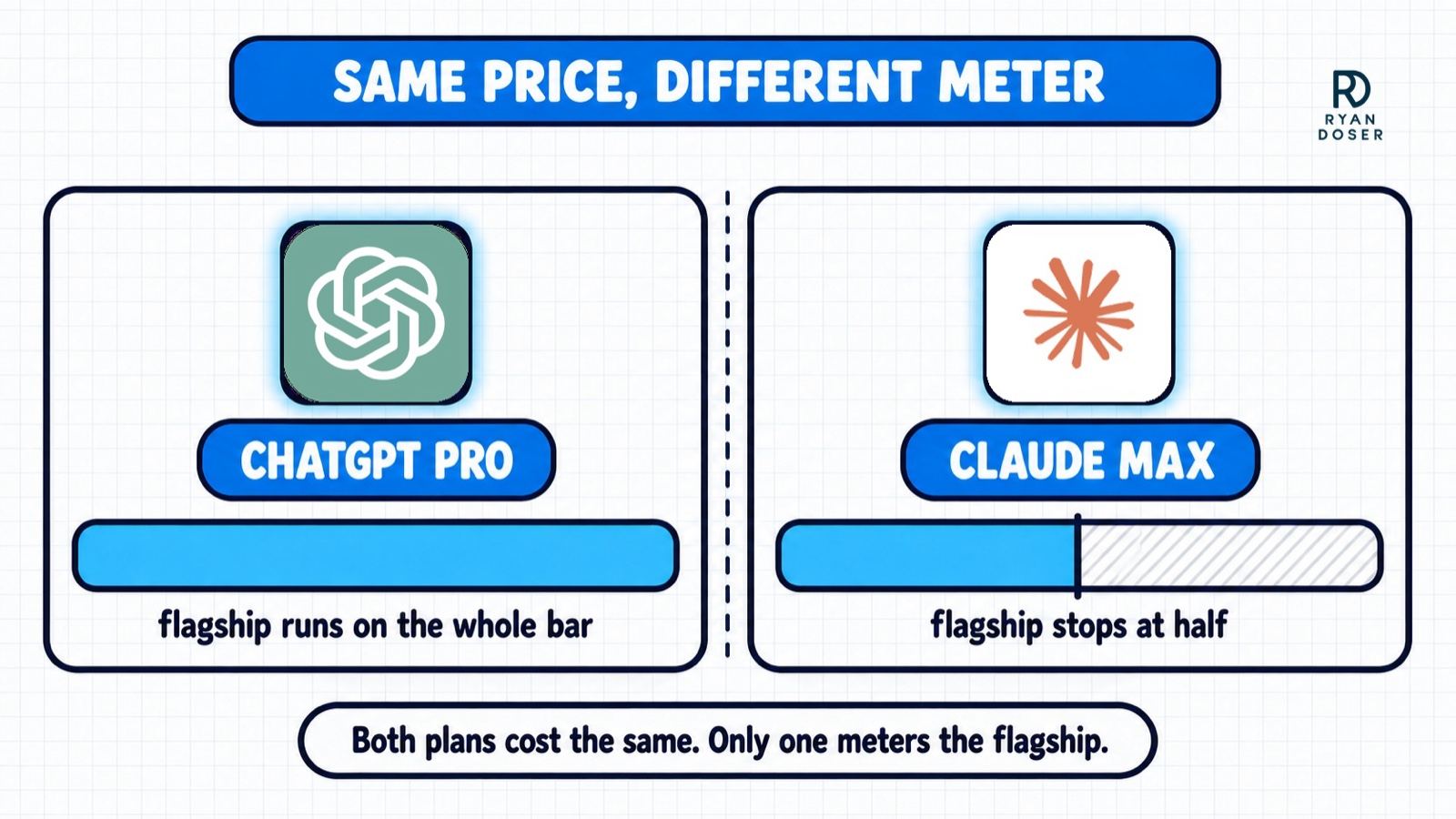
Both companies sell a $100 plan and both sound identical on the surface. They are not, and the difference is how each one meters its best model.
ChatGPT Pro at $100 gives you 5x Plus usage. Claude Max starts at $100 and gives you 5x Pro usage. Same price, same-sounding multiplier, and the two baselines are not the same size to begin with.
One more wrinkle on the Claude side that is easy to miss: those multipliers describe the rolling 5-hour session window, not the weekly ceiling. Weekly limits do not scale by the same factor, so moving from Max 5x to Max 20x does not quadruple what you can do in a week. Since the weekly number is the one that actually stops you, read 20x as a burst allowance rather than a weekly one.
The deals differ, and it comes down to one sentence in Anthropic's own support docs: on Max you can use up to 50% of your weekly usage limits on Fable models. Fable is the model you are paying for. It is metered to half your allowance.
| Plan | Price | Stated usage | Flagship access | What is metered |
|---|---|---|---|---|
| ChatGPT Pro | $100/mo | 5x Plus | GPT-6 Pro in main chat | Standard plan limits |
| ChatGPT Pro | $200/mo | 20x Plus | GPT-6 Pro in main chat | Standard plan limits (new signups paused) |
| Claude Max | $100/mo | 5x Pro, per 5-hour session | Fable, capped | Fable at 50% of weekly limits |
| Claude Max | $200/mo | 20x Pro, per 5-hour session | Fable, capped | Fable at 50% of weekly limits |
The figures in that table are what the two companies published as of September 17, 2026, and this is a fast-moving corner of the market. Check both pricing pages before you buy anything.
There is a second change worth separating out, because it is easy to mix up with the Fable cap. On September 14 Anthropic replaced a temporary 50% boost to Claude Code weekly limits with a permanent 25% increase, and that change is now in effect. That is Claude Code specifically, not your chat usage, and it has nothing to do with the Fable cap above.
Run the arithmetic. If your baseline is 100, the boost put you at 150, and the permanent raise puts you at 125. That is roughly 17% less than what heavy Claude Code users lived on through the summer. Anthropic is correctly calling it a permanent increase over the original baseline. It is also a cut from what you had before September 14. Both things are true.
One caveat before anyone goes shopping: OpenAI paused new sign-ups to the $200 Pro tier on September 10. Existing subscribers are unaffected and the $100 tier is still open. So the $200-versus-$200 comparison is academic right now if you are not already in.
Which Jobs I Moved and Which Ones Stayed
Forget which model is better and ask which job goes where.
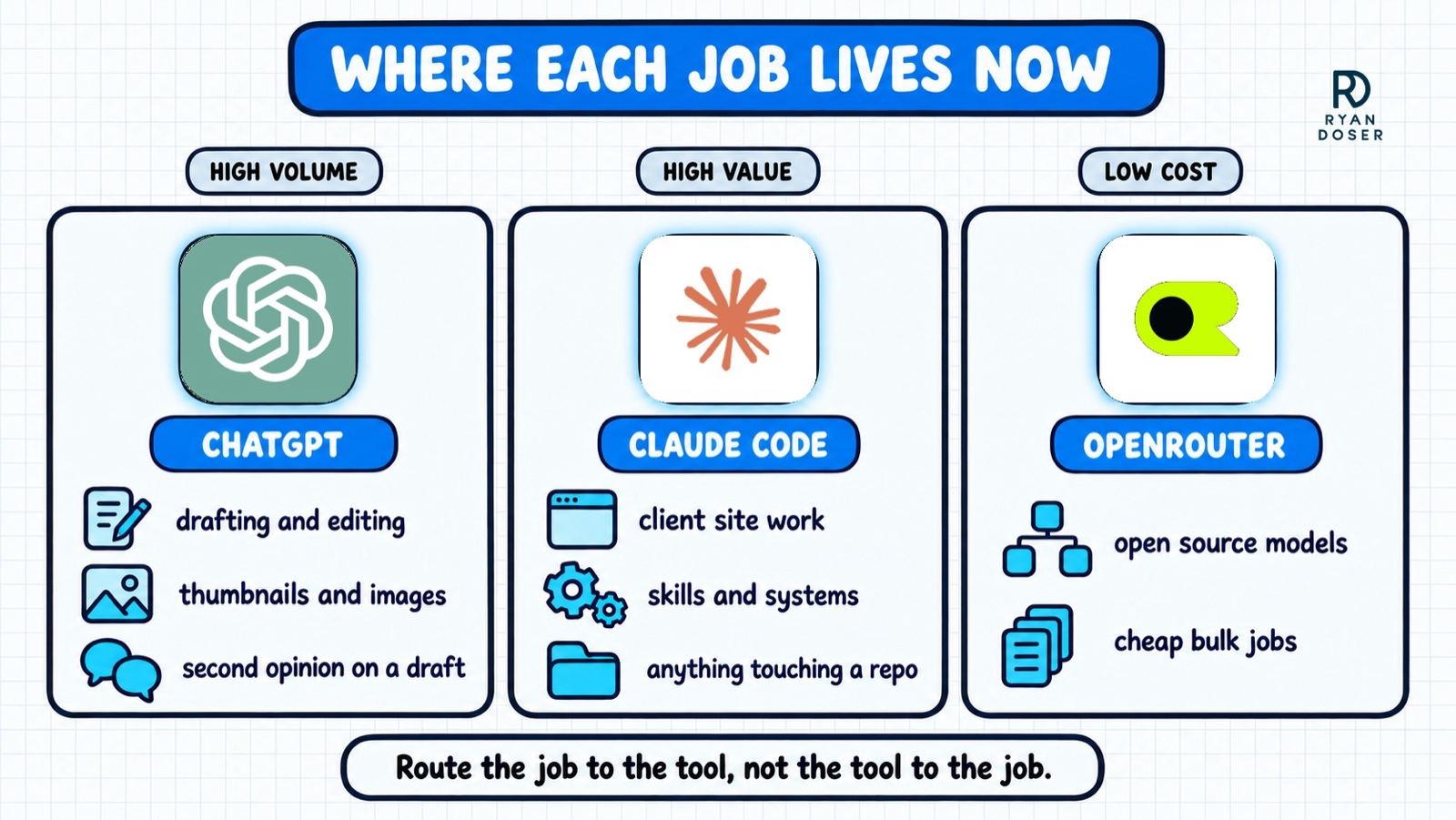
Stayed with Claude Code and Fable: building and running systems. Client site work, the cron publisher, skills, anything touching a repo. The skill files themselves are portable, as you will see in a minute. What keeps me here is the execution environment around them, which is the piece I would actually have to rebuild.
Moved to GPT-5.6 Sol: drafting, editing, and red-teaming content. First drafts, tightening, and having a second model attack a piece before it ships. This is high-volume work, and high-volume work is exactly what you don't want metered to half your week.
Moved to ChatGPT Images 2.5: thumbnails, featured images, and the diagrams in posts like this one. Subject preservation is the reason. Getting my own face to stay consistent across a reference photo was the job I kept redoing, and that is the thing 2.5 fixed.
Stayed on OpenRouter: open-source model pulls. DeepSeek, Kimi, GLM when a job is cheap and bulk and does not need a frontier model. That runs under $50 a month and I covered the setup in my post on using OpenRouter inside Claude Code.
I put numbers on that gap a while back. I rebuilt my homepage with Opus and then ran the same task through five open-source models, and the spread was not close. Kimi was the most expensive of them at roughly 30 cents, while GLM came in near two cents. Running it on the frontier models would have cost several times more. Quality was not equal either, which is the point. Frontier models earn their price on work that needs them, and most bulk jobs do not.
One ChatGPT feature genuinely changed how I work and almost nobody mentions it. The desktop app runs on a Mac or PC, you pair your phone to it, and you drive that session from anywhere. Mine runs on a Mac Mini that keeps working while I am not at my desk.
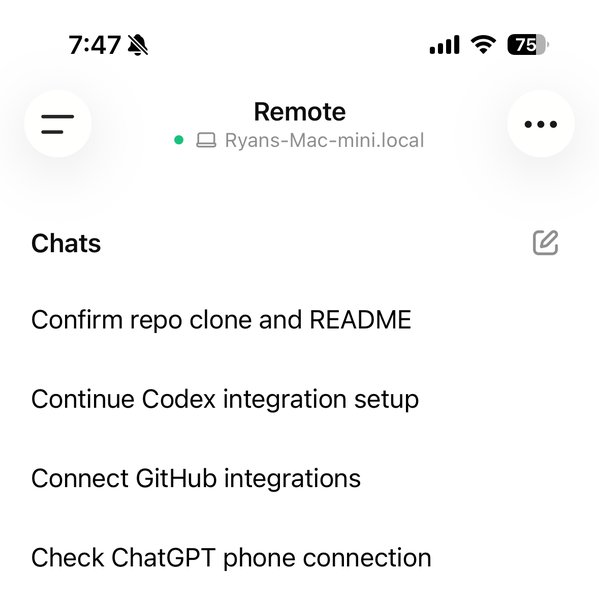
The catch is real: if that machine sleeps or drops off the network, remote access stops. There is no magic, just a paired session. But it clears a bar most agent tooling does not for a non-technical marketer. I wrote about why you should avoid OpenClaw and looked at Hermes AI agents for a specific automation job, and both are more setup than a QR code and a machine you already own.
Notice the pattern. The expensive, careful, system-level work stayed. The high-volume repeatable work moved to the plan that does not ration the flagship separately.
The Case For Not Paying Anthropic At All
I pay for both plans. Aaron pays for one, and it isn't Claude's. Since I'd rather show you a real disagreement than pretend the buying decision is obvious, here is his argument in full.
His position is that Fable is the only thing on Claude Max worth having, and that one model does not carry a $100 subscription when you can only spend half your allowance on it. Everything else in the lineup he considers a non-factor for his work.
Stack the constraints and you can see the shape of it. Half your weekly limit is the ceiling on the model you upgraded for. There's a 5-hour rolling session window on top of the weekly one. And a Claude subscription still generates no photos or illustrations, so that job leaves the ecosystem no matter what. Claude does build diagrams, charts and interactive visuals, and Claude Design handles mockups and decks, but none of that replaces an image model.
Two Things We Got Wrong On Camera
Both of these were arguments against Claude, which is the direction I was already leaning, so they are exactly the kind of error that slides through unchallenged. I checked them against both companies' documentation after we recorded. Correcting them here rather than quietly dropping them.
I said you have to be on a Max plan to touch Fable. You don't. Per Anthropic's own support docs, Fable 5 and 5.1 are available on every paid plan including Pro at $20, but on Pro they run on usage credits rather than your included allowance. The 50% ceiling is what's bundled into Max specifically. So the honest version is narrower than what I said: Max doesn't buy you access to Fable, it buys you included Fable usage, capped at half your week.
We also both got the data question wrong. Aaron said he can't opt out of Anthropic retaining his prompts. You can, under Settings then Privacy, and OpenAI has the same switch under Settings then Data Controls. What Anthropic does publish is the retention math: up to five years de-identified if you leave it on, 30 days after deletion if you turn it off. I could not find OpenAI publishing a matching figure, so treat the comparison as unresolved rather than settled in either direction. Either way, go turn the setting off.
The Argument That Survives Checking
Ask what each company has optimized for since January.
His read is that Anthropic's models got better and also got more expensive, used more tokens, and gated more behind higher plans, so the bill climbed at least as fast as the output did. The Fable cap and the Claude Code limit change earlier in this post are both evidence for that. OpenAI spent the same period getting more work out of the same money, while everyone was still making fun of ChatGPT for business use.
I don't fully agree with where Aaron lands. But the framing is right, and it is the question I'd ask before renewing anything: is this company optimizing for my output or for my bill?
There's a real counterweight, though, and it's the thing his framing understates. A subscription is not only a model, it is the environment you run it in. My repos, my client work, and my publishing systems all execute through Claude Code, and Fable is still what I reach for on the highest-stakes single outputs. Aaron is optimizing for cost per unit of work, which is the right call when your work is not tied to one environment. Mine is. Those are two honest positions producing two different answers, which is why this question has no universal one.
The Cross-Check Habit That Matters More Than The Model
One workflow tip is worth more than any benchmark in this post.
I run GPT-5.6 Sol on high reasoning effort as a gatekeeper. Whatever produced the work, Fable, Opus, or an open-source model, Sol gets the last look before anything ships. For genuinely high-value work like a landing page or a technical SEO change, I'll spend Astra on that final vet instead.
Cross-check your output against at least two models, three if your token budget allows it. Models fail in different directions, and the second one catches what the first was confident about. Everything in this post about which plan to buy matters less than whether you actually do this.
Where Claude Still Wins
First, Fable is still the best model I own. Not "was." Is. When I need the highest-quality single output and I am willing to spend limits on it, that is the one I reach for.
Second, Claude Code is still home base. My skills, my systems, my client work all live there. A model being marginally better somewhere else does not beat the system you have already built, which is the whole argument I made for running Claude Code and Codex together.
Third, design. Authority Hacker ran a one-shot design test across Astra, Fable 5.1 and Opus on the same prompt, and their read has consistently put Claude ahead on front-end design. Their conclusion isn't "drop Claude" either. It is that you have to decide whether the frontier model is worth the money or whether the step below it fits your plan comfortably.
Why the Switch Cost Me an Afternoon
Here is the part I did not expect. Moving this much work between two vendors took an afternoon.
Not because I'm fast. Because almost none of my work lives inside a chat window. It lives in skills, which are plain markdown files that load into Claude Code or Codex. Prompt, rules, examples, guardrails, all in text.
So moving a job from one vendor to another was mostly pointing a different tool at the same files. The system was portable because it was never tied to a model in the first place. That is the same reason I package these as the Claude Code Skills Stack, and it is the single most useful thing I can tell you here.
The models matter, as three tests just showed. What does not matter is which company you happened to build on. If a pricing change at one vendor can strand your entire workflow, you don't have a workflow, you have a subscription.
So here is where I actually stand. I pay for both $100 plans and I reassigned the work between them. I haven't downgraded Max, I'm only considering it. I'm eyeing the $200 ChatGPT tier and haven't moved.
None of that is urgent, because nothing I built is locked to either one. If Anthropic loosens limits next month, the work moves back the same afternoon.
ChatGPT Pro vs Claude Max FAQs
If I can only afford one, which should I buy?
Buy on the job that eats most of your week. If that is writing, editing and images, ChatGPT Pro at $100 gets you more usable output because flagship access is not separately metered. If it is building and running systems inside a repo, Claude Code is worth the cap and nothing else is close.
Is GPT-6 Astra better than Claude Fable 5.1?
Not on writing quality, in my testing. Fable wrote better long-form copy and stayed on brand when Astra did not. Astra was faster, burned fewer tokens to finish, filled in work I had not asked for, and generates images natively. If you want the single best output and can wait for it, reach for Fable. If you want more finished work per hour, Astra.
Do Astra and Fable 5.1 cost the same on the API?
At standard rates, yes. Both run $10 per million input tokens and $50 per million output tokens, and both cut that in half for batch work at $5 and $25. Where they diverge is the extras: Astra adds a flex tier, a premium fast tier at $20 and $100, and higher pricing above 272K of context. Anthropic does sell a fast mode, but it covers Opus rather than Fable. So the base rates match and the difference in what you pay comes from how many tokens each burns to finish the job.
Do you need Claude Max to use Fable?
No. Fable 5 and 5.1 are available on every paid Claude plan including Pro at $20, but on Pro they run on usage credits rather than your included allowance. What Max buys is included Fable usage, capped at 50% of your weekly limits. Free is the only tier with no Fable access at all.
What is the Claude Fable 50% limit?
On the Max plan, Anthropic's support docs state you can use up to 50% of your weekly usage limits on Fable models at no extra cost. Fable is the flagship, so half your weekly allowance is the ceiling on the model you upgraded for. A separate 5-hour session window resets on its own schedule alongside the weekly limit.
What happened to Claude Code limits on September 14?
A temporary 50% increase to Claude Code weekly limits expired on September 13 and a permanent 25% increase replaced it on September 14. Against the original baseline that is a raise. Against what heavy users had over the summer it is about 17% less. This applies to Claude Code, not to chat usage, and it is separate from the Fable 50% cap.
Can I still buy the $200 ChatGPT Pro plan?
Not as a new subscriber as of September 10, when OpenAI paused new sign-ups to that tier. Existing subscribers are unaffected and the $100 Pro plan is still available.
Does this comparison change if I never generate images?
Yes, and it gets closer. Images are a whole category moving to OpenAI, so take that out and you are weighing drafting volume against system work. If you build more than you write, staying on Max alone is defensible.