
How to Build and Sell an AI Second Brain (Full Playbook)
The models are rented. The knowledge is owned. This playbook covers how to build an AI second brain out of plain markdown files, then how to sell that same build to businesses as a service.
AI Second Brain Video Guide
Adam Sandler builds knowledge systems for founders, agencies, and marketing leaders at The Viable Edge. He came back on AI Rabbit Holes to walk through his setup and the business behind it.
Here's the short version of what a second brain is, because you need it before the pitch makes sense.
It's a structured, durable body of company knowledge any AI model can search on its own. Documents, decisions, transcripts, brand rules. Organized so an agent knows where to look without being told.
You don't need a vector database. You don't need RAG. "You don't really have to worry about the tech stack," Adam said, because most small businesses don't have enough information to justify one.
Markdown files are enough. A knowledge base at its most basic form is a folder of documents with mechanisms that let those documents make sense in the context of each other.
If you want to go deeper on the systems side of this, I put together a guide covering my own Claude Code setup and the automation stack I run every week. You can grab the Free AI Marketing Guide here.
Adam runs his own personal base in Obsidian, and I run mine as a plain markdown vault. Neither of us needed anything fancier to start.
How to Build an AI Second Brain
Four steps take you from a pile of scattered files to something an agent can actually use. None of them require a database.
Step 1: Run an Ingestion Period
Knowledge has to get into the base somehow, and Adam calls this the ingestion period. Every build starts here.
His platform does it through an onboarding chat that scans your website, looks at competitors, and takes whatever else you hand it. You do not need his platform to copy the idea. When I do this myself, I point Claude at the company site, whatever call transcripts exist, and the brand docs, then have it draft the first pass.
Resist the urge to dump everything in. Most of a historical archive is irrelevant to what the business is doing right now, and hauling all of it in is the fastest way to poison the base.
Step 2: Pick the Schema Before You Organize
This is the step people skip, and skipping it is why most knowledge bases rot.
Decide what you are documenting before you start filing things. Adam has material laying out a baseline schema of seven core data points, which he says is usually enough to get going. Your client will not know what schema they need. That judgment is the work you are being paid for.
Everything hangs off what he calls the spine. What is the one thing the whole business ladders up to? Usually a high-level goal. Structure the rest around it.
Step 3: Link Everything So the AI Finds Its Own Way
A folder of documents is not a second brain. The links are what make it one.
Adam follows the Karpathy method of wiki linking everything in Obsidian, though he was direct that Obsidian is a preference and not a requirement. The mechanism matters more than the app.
Once the linking system is implemented, he says the base can find its own way, so he never has to tell the AI where to look. In practice it "kind of feels like magic."
My own vault works the same way. Every Claude Code conversation auto-saves to markdown and backs up to Google Drive daily, wiki-linked to my CLAUDE.md and AGENTS.md files. That is what makes my self-improving Claude Code skills work at all.
Step 4: Tier It Into Hot and Cold Context
A base that treats a call from last week the same as a memo from 2021 will drown its own agent.
Adam splits out what he calls hot context, the material that matters right now, like summaries of calls from the last two weeks. The detail stays accessible underneath if an agent needs to drill down, but it does not crowd the top.
That split is what keeps the base useful past month three. It is also where the recurring revenue lives.
That's the product. Now here's the business.
Why AI Second Brains Sell Themselves
Most AI projects die in the same place. A business owner asks for an agent that runs their marketing like a fractional CMO, and there's no context behind it.
That request is useless without a second brain feeding it. It has to be step one, before any workflow building starts, which is why I keep telling business owners running Claude Code to fix their context first.
The pitch writes itself because most companies are a mess. Their information is scattered across five tools and three generations of employees.
You walk in and say you'll get their knowledge in order, structure it, and make them ready for AI without locking them into one provider.
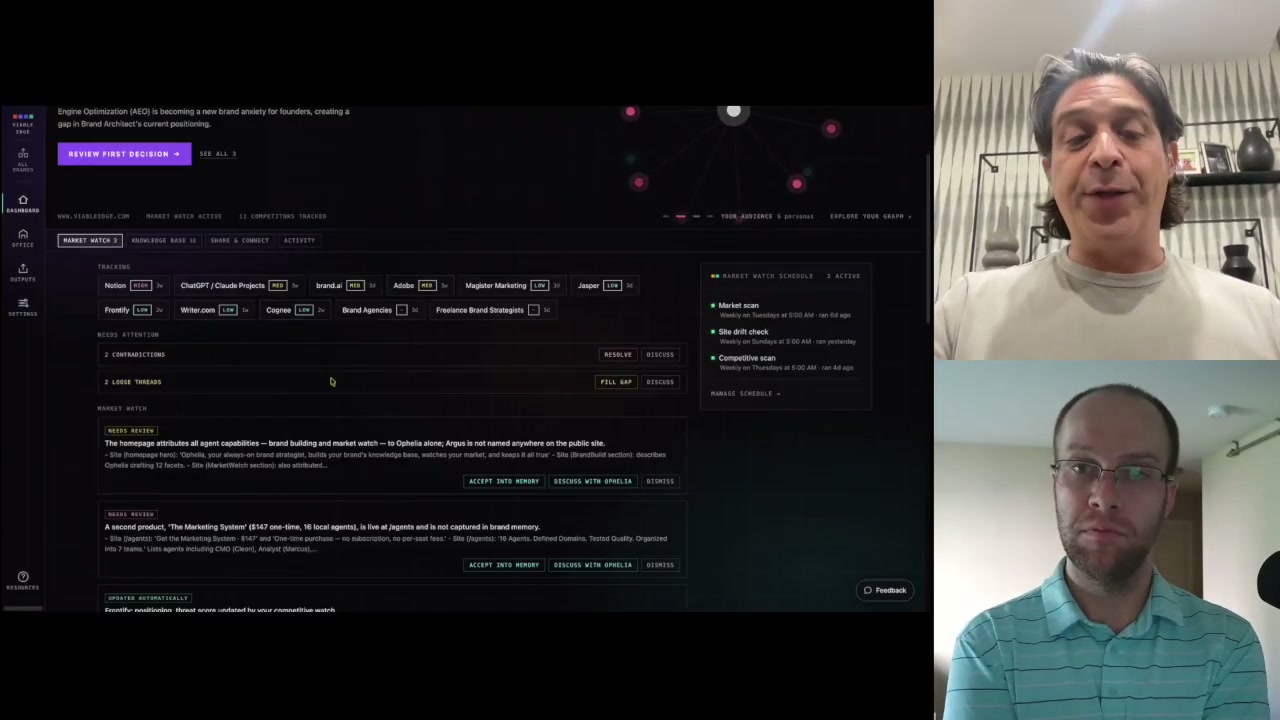
That last part is the close, and it has nothing to do with productivity. If a client hitches their wagon to a knowledge base instead of Anthropic's ecosystem or OpenAI's, they aren't stuck when a provider raises prices or kills a feature they depend on.
Their context travels. That's a benefit no model vendor can offer them, and it's the one Adam called one of the biggest in his mind.
How to Sell an AI Second Brain as a Service
Adam calls this one of the biggest opportunities in AI right now, specifically for practitioners trying to figure out what to actually sell. It belongs on the short list of ways to make money with Claude that don't require you to be a developer.
Here's how the engagement actually stacks up.
Sell the Audit First
My rule: never lead with the build. Lead with an audit, because the audit is what scopes everything after it.
Adam has material laying out a baseline schema of seven core data points, which he says is usually enough to get going. The audit hunts for what he calls the company's spine. What's the one thing everything else ladders up to? Usually a high-level goal or objective.
The audit does double duty. It scopes the build, and it surfaces disconnects the client didn't know existed. Brand guidelines from 2020 sitting next to a contradictory set from last year.
That second part is what earns the next invoice. You're not delivering a document. You're delivering the first honest look at their own information they've had in years.
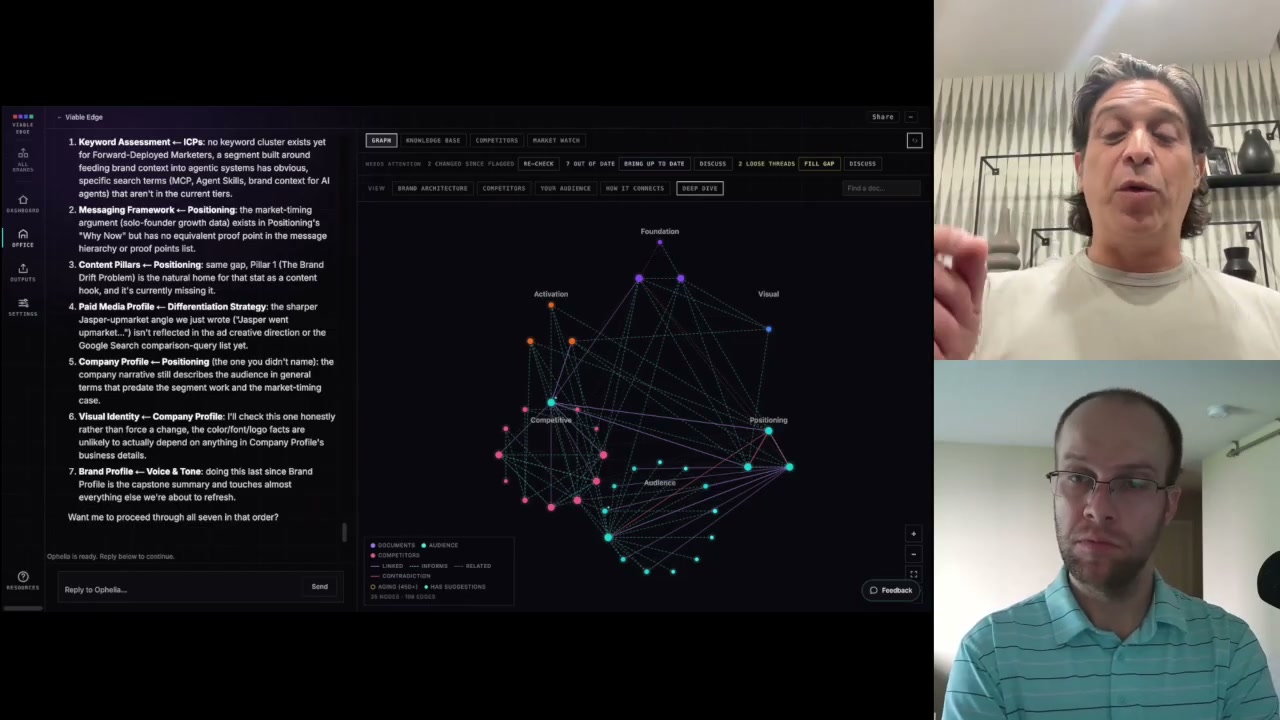
On my end, I've found that scraping a company's own website with Firecrawl and asking for a detailed brand guide beats what most companies had on file a decade ago. That's a 20-minute deliverable that reliably makes a prospect uncomfortable, in the good way.
Land on a Department, Not the Company
Adam went out of his way to add this one, and it's the part most people get wrong.
He's running department-level knowledge bases for clients now, with a hierarchy where separate bases integrate with each other. An SEO second brain is a different animal than an accounting second brain.
So you come in smaller. One department, one engagement, faster to deliver, easier to approve. You get your feet wet and build trust before biting off the whole company.
Then it expands, because once a knowledge base exists, building agents and tools on top of it becomes much more straightforward. You're setting yourself up for more business, not a one-time invoice.
Build the Upsell Ladder Into the Delivery
The ladder is already there if you sequence it right.
Markdown gets you started, but it stops paying off once the volume climbs. When a client outgrows files, Adam points to Supabase or something like it as the next step, mostly because it's inexpensive, integrates broadly, and has treated him well. He wants to explore Convex next.
The path from markdown to a real database is short, and that's the point. You don't need a stack to deliver value on day one, but you do need somewhere to go on day ninety.
The rung after that is the interface. A chat box with slash commands confuses people who've never worked that way. A branded markdown file browser or knowledge graph doesn't.
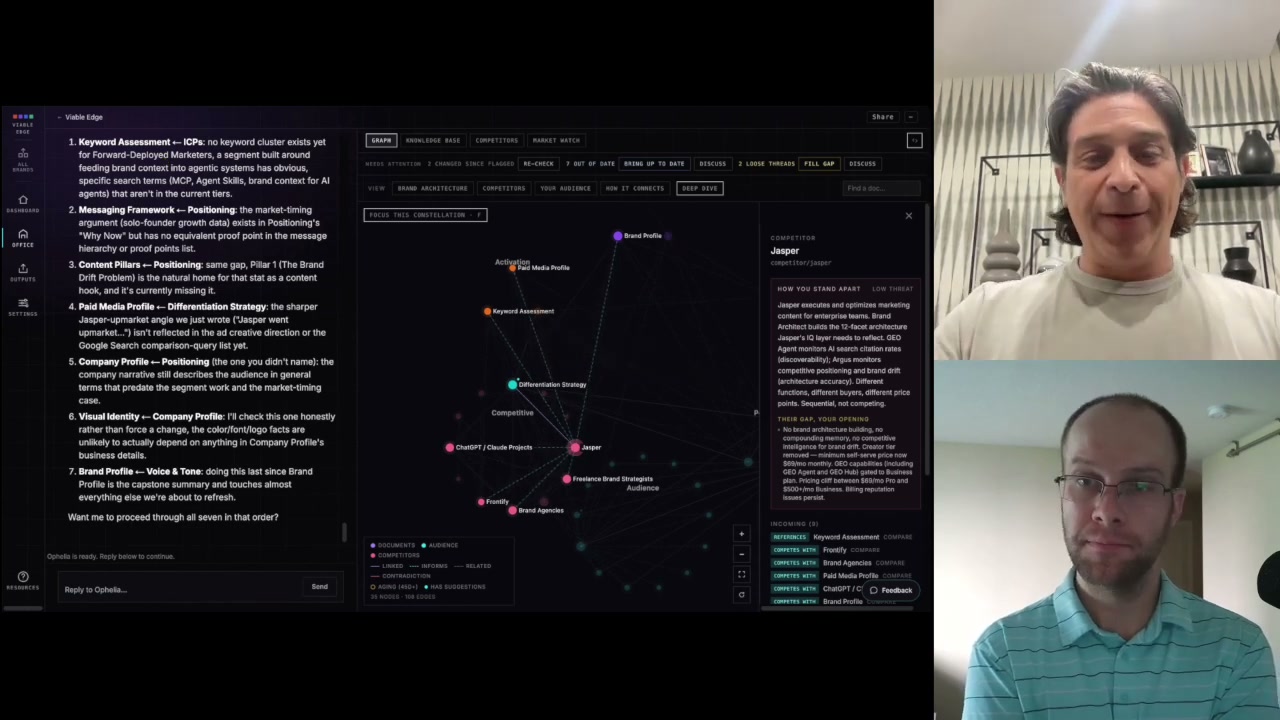
Adam's platform outputs the same body of information through an MCP server, Claude instructions, an Obsidian vault, custom skills, or a Claude plugin. One source, many destinations.
Make It Recurring
A knowledge base that nobody tends becomes a graveyard in about a quarter. That's your retainer, and it should be a scoped monthly line item from day one, not a favor you do when a client emails you.
Adam describes the maintenance job as a flywheel. How is information ingested? How is it synthesized? How does stale information get archived out of what's currently relevant?
That is the hot and cold split from Step 4, except now it is somebody's job. Something has to decide every week what moves down into the archive, and that something can be you.
There's a second retainer hiding in here that clients aren't thinking about. Decision logs. Adam has spent two decades in the workforce and has never seen a company track high-impact decisions with the specificity a knowledge base enables.
Ryan's Final Thoughts
Most companies don't have an organized second brain, and that gap is what separates the businesses getting real output from AI from the ones burning money on agents that hallucinate their own brand voice.
Adam's honest take on the fad question stuck with me. The discipline is here to stay even if the tooling changes, because every model coming next still needs context. He's worth following on LinkedIn and on the Viable Edge YouTube channel.
Start this week with a folder of markdown files and a habit of putting things in it. Then go find one company drowning in its own transcripts and offer them the audit.
AI Second Brain FAQs
What is an AI second brain?
An AI second brain is a structured, durable knowledge base that AI models can search on their own. It holds company context like documents, transcripts, decisions, and brand rules, organized so an agent can find what it needs without being told where to look. It's the storage layer that makes your AI outputs specific to your business.
How do you build an AI second brain?
Start with an ingestion period to get existing knowledge in, pick a schema before you organize anything, wiki link the documents so the AI can find its own way, then split the material into hot context and archived detail. All four run on plain markdown files, with no vector database required. See the build section above for the full walkthrough.
Do you need a vector database for an AI second brain?
No. Adam Sandler builds client second brains on markdown files, and most small businesses don't have enough information to justify RAG or a vector database. Markdown works well with AI, is easy to maintain, and migrates cleanly to a database like Supabase once you actually outgrow it.
How do you price an AI second brain build?
Adam positions the build as the opening engagement rather than a one-off project, starting with an audit that scopes the work. Because agents and workflows get built on top of the knowledge base afterward, and because the base needs steady maintenance to stay relevant, the model favors a long-term relationship over a single invoice. Department-level builds let you start smaller.
Is second brain as a service a real business?
Adam believes the discipline is durable even as tooling shifts, because every AI model needs context to produce useful work. He also noted a lot of context engineering solutions target software engineers rather than knowledge work, which leaves a gap for non-technical practices.
What is the difference between a second brain and a knowledge base?
Adam treats the terms as interchangeable. Both describe collecting, aggregating, and structuring relevant information so it stays durable and can scale. "Second brain" tends to imply personal use while "knowledge base" implies company use, but the underlying structure and benefits are the same.