
7 Best AI Writing Tools in 2026 (Avoid Most of Them)
The best AI writing tools in 2026 are the two or three you can go to directly, before a dozen middlemen resell you the same output at a markup. Ad budget has almost nothing to do with which ones actually write well.
I write and publish content every day across a seven-figure SaaS, a cybersecurity brand, and my own channels. I have paid for most of the tools on this list, and I have watched the whole category quietly reorganize itself around one uncomfortable fact. So this is not another affiliate roundup that ranks whoever pays the most. It is the honest version, written by someone who ships with these daily. If you want the wider set of apps I run beyond writing, I keep a separate roundup of the best AI tools for content creators.
The Truth Most "Best AI Writing Tools" Lists Will Not Tell You
Search "best AI writing tools" and you get the same names every time. Jasper, Copy.ai, Writesonic, Rytr, and a dozen more that appear the day you hit publish.
Almost none of those roundups admit the obvious. Most of these tools are a paid interface sitting on top of the exact same models you can access directly. They send your prompt to OpenAI or Anthropic, get the text back, and hand it to you inside their own dashboard. You are frequently paying a subscription for the wrapper, not for the writing.
Two of the tools below say this out loud on their own pricing pages. Sudowrite states it runs "the latest Claude models by Anthropic" and "several models created by OpenAI." Copy.ai advertises "access to OpenAI, Anthropic, and Gemini models." That is not an accusation. It is their own marketing copy.
I do not say this to trash the category. A few of these tools genuinely earn their price by wrapping the model in a workflow you would not want to rebuild. But you cannot judge which ones are worth it until you see the math underneath.
The Math That Reframes Every AI Writing Tool
I broke this down in a video over a year ago, and it has only gotten more lopsided since. Let me show you the current 2026 numbers.
Take a typical tool that charges around $29 a month for, say, 15 blog posts. Sounds fair until you price the raw ingredients.
A 1,200-word blog post is roughly 1,600 output tokens (the rule of thumb is about 750 words per 1,000 tokens). At OpenAI's current GPT-5.4-mini rate, that post costs under a cent in API tokens. On a cheaper model like GPT-5.4-nano it is a fifth of a cent. Even on a premium model like Claude Sonnet 5, a 1,200-word draft runs about two cents.
So 15 blog posts cost the tool maybe 10 to 30 cents in raw API calls. They charge you $29. The rest is markup on a call you could make yourself. That is the entire business model of most of this category, and it works because most buyers have never seen the token math.
Once you know that, the real question changes. It is no longer "which AI writing tool is best." It is "when is the wrapper actually worth paying for, and when should I just go to the source?"
The Best AI Writing Tools in 2026
I split this list into two tiers on purpose. First, the sources: the frontier models you should pay for directly, because everything else runs on them. Then the wrappers worth their price, because they add a real workflow the raw model does not give you. Prices were verified on the live vendor pages on July 8, 2026.
Tier 1: The Sources (Just Pay for These)
If you only pay for one or two writing tools, make them these. Everything in Tier 2 is, to some degree, reselling what these two do.
1. Claude (Best Overall AI Writing Tool)

Claude is my daily writing tool, and it is the one I trust to sound human on the first pass. Anthropic's models handle tone, nuance, and long-form structure better than anything else I use, which is exactly why so many "AI writing tools" route their requests to it behind the scenes.
Pros:
- The most natural-sounding output of any tool here, with the least cleanup.
- Huge context window, so you can paste a whole brand guide or draft and work against it.
- You are paying the source directly, no wrapper markup.
Cons:
- No purpose-built marketing templates or campaign dashboards out of the box.
- Usage caps on lower tiers can bite during heavy writing days.
Best for: anyone who wants the highest-quality drafts and the least AI slop to edit out.
Pricing: Free tier available. Pro is $17 a month billed annually ($20 monthly). Max starts at $100 a month for heavy use.
Free trial: Yes, a genuinely usable free tier.
Bottom line: If you buy one writing tool in 2026, buy this. It is the source, the quality leader, and the thing half this list is secretly built on.
2. ChatGPT (Best for Research and All-Around Work)
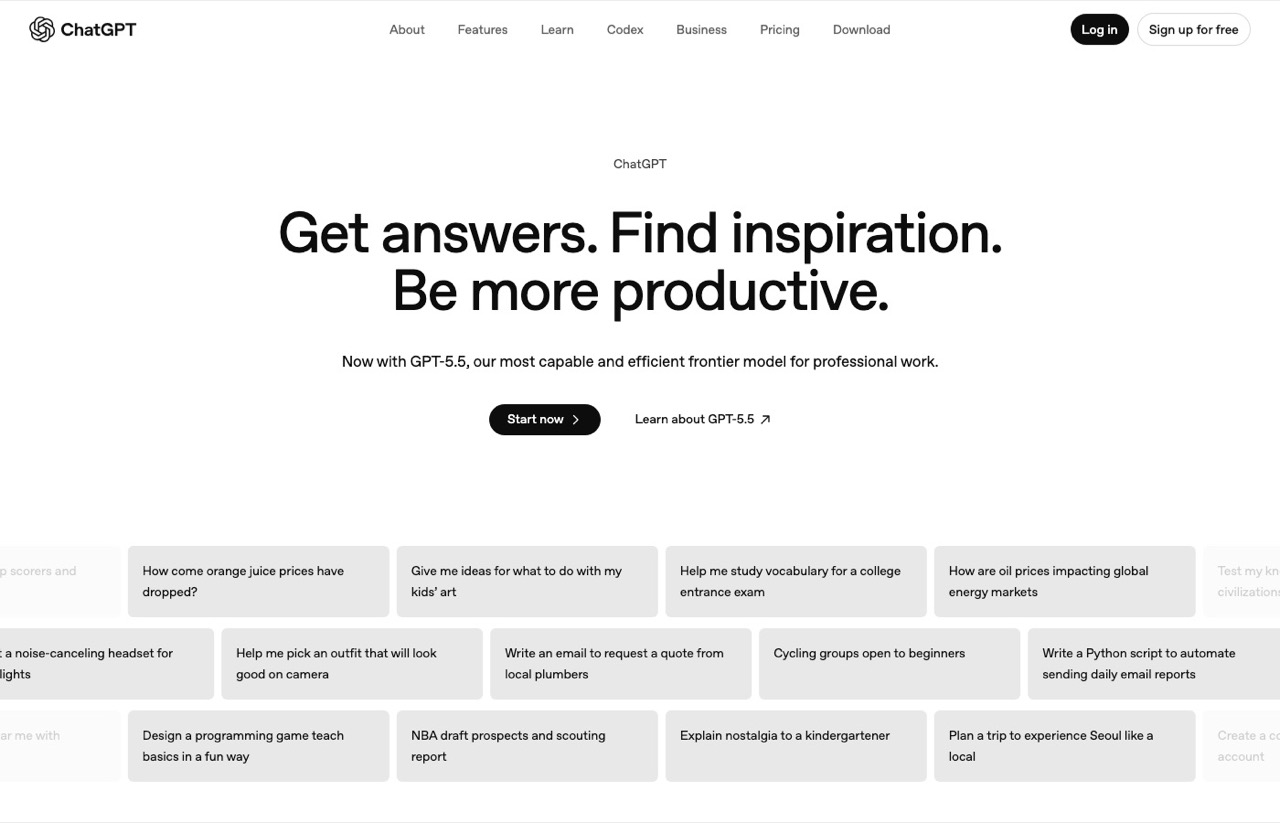
ChatGPT is the other tool worth paying for at the source. Where Claude edges it on pure writing feel, ChatGPT pulls ahead when a piece needs live research, data wrangling, or image generation stitched into the same workflow.
Pros:
- Strongest when research and writing happen in one place.
- Native image generation and web browsing built in.
- The default most people already know, with the deepest ecosystem.
Cons:
- Default output leans more generic than Claude and needs more voice editing.
- The best features sit behind the pricier tiers.
Best for: writers who want one tool that researches, drafts, and makes images together.
Pricing: Free tier available. Go is $8 a month, Plus is $20 a month, Pro is $200 a month.
Free trial: Yes, a free tier covers casual use.
Bottom line: The other source worth paying for directly. Pick it over Claude when your writing leans on research and multimedia, not just prose quality.
Tier 2: Wrappers Worth Paying For (When the Workflow Beats the Markup)
These tools run on the same frontier models, but they wrap them in a workflow that saves real time for a specific job. The test is simple: are you paying for something the raw model cannot do for you, or just for a nicer button?
3. Jasper (Best for Marketing Teams and Brand Voice)

Jasper is the wrapper that earns its keep for marketing teams, not solo writers. It layers brand-voice controls, campaign workflows, and team collaboration on top of several fine-tuned models, so a whole team writes on-brand without everyone re-prompting from scratch.
Pros:
- Genuine brand-voice enforcement across a team, which raw models do not centralize.
- Campaign and workflow orchestration built for marketing departments.
- Deep template and integration library.
Cons:
- The price is steep next to going to the source, and you pay for the orchestration, not the model.
- Overkill for a solo creator who can get the same drafts from Claude.
Best for: marketing teams that need many people writing on-brand at once. If that is your world, it also sits alongside the wider best AI marketing tools I rank separately.
Pricing: No free tier, trial only. Pro starts at $59 a month billed annually ($69 monthly).
Free trial: Yes, a limited trial, no permanent free tier.
Bottom line: Worth it for a team that needs brand-voice governance and campaign workflows. A solo writer is better off at the source.
4. Sudowrite (Best for Fiction and Creative Writing)
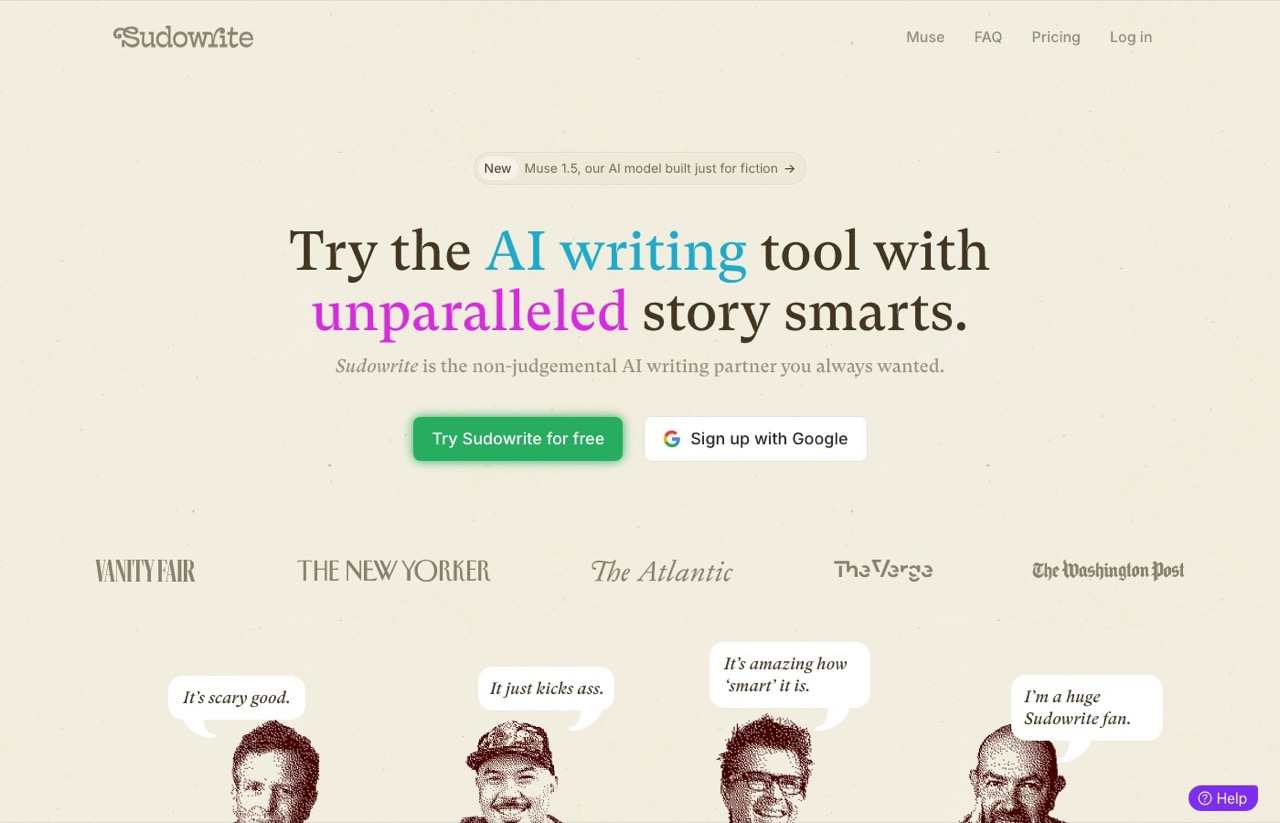
Sudowrite is the one wrapper I recommend without hesitation for its niche, because the workflow is genuinely purpose-built. It is made for novelists and fiction writers, with tools like Story Bible, character tracking, and scene expansion that a raw chat window simply does not offer.
To its credit, Sudowrite is transparent about the model underneath. Its own pricing page says it runs the latest Claude and OpenAI models, so you know exactly what you are paying the wrapper to organize.
Pros:
- Fiction-specific tools (Story Bible, character and plot tracking) no general model packages.
- Openly discloses the frontier models it runs on.
- Affordable entry price for the value to a working novelist.
Cons:
- Useless for marketing or business writing, this is a fiction tool.
- You are still paying on top of model costs you could access directly for general prose.
Best for: novelists and fiction writers who want structure around long creative projects.
Pricing: No free tier, trial only. Hobby and Student starts at $10 a month.
Free trial: Yes, a trial, no permanent free tier.
Bottom line: The clearest "wrapper worth it" pick on this list, but only if you write fiction. For anything else, go to the source.
5. Grammarly (Best for Editing and Polishing)
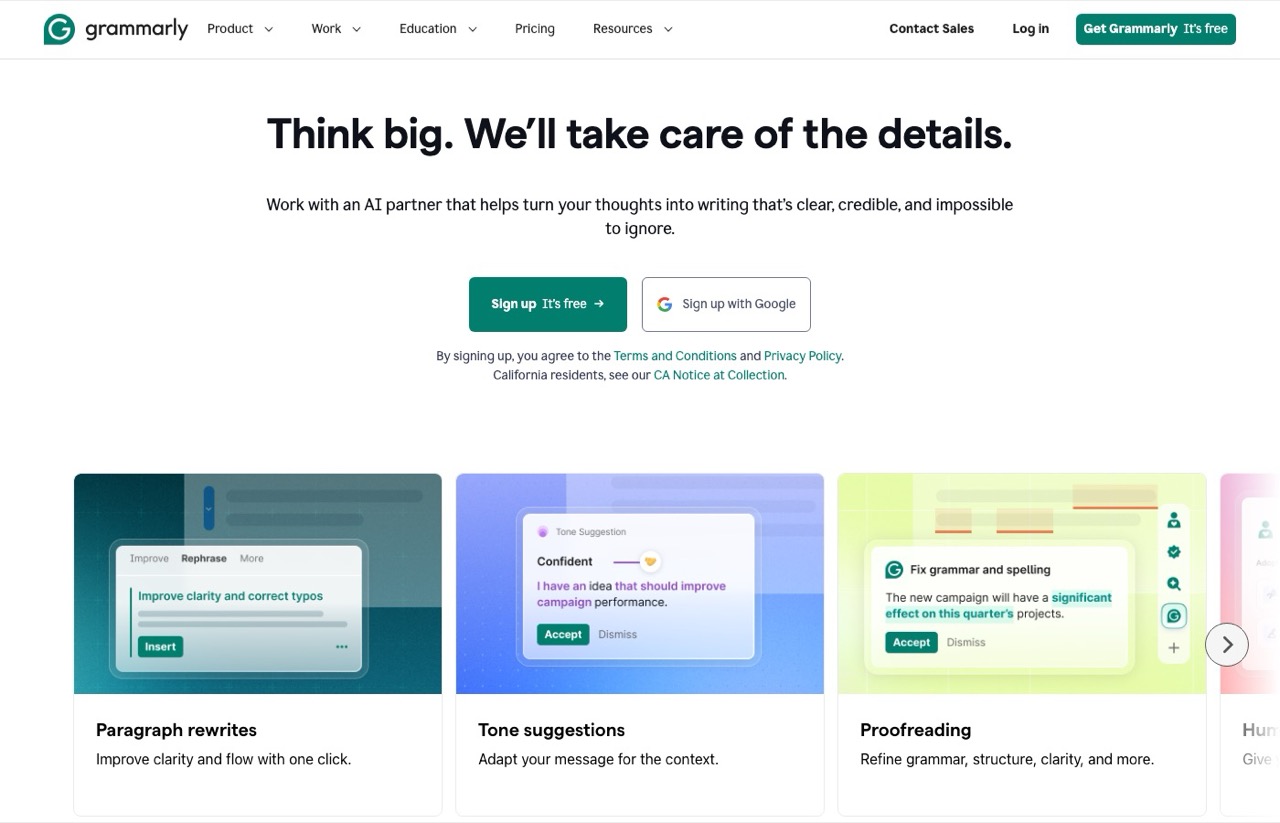
Grammarly is not a content generator, and that is the point. It is the editing pass, catching grammar, tone, and clarity issues right inside your email, doc, or CMS. It earns its spot because it works everywhere you write, not in a separate tab.
Pros:
- Real-time editing built into the browser and apps you already use.
- Strong grammar, tone, and clarity suggestions.
- A free tier that covers the essentials.
Cons:
- Not a drafting tool, so it pairs with a source rather than replacing one.
- Its underlying models are not disclosed, so treat the AI features as a black box.
Best for: anyone who wants a live editing layer over everything they write.
Pricing: Free tier with 100 AI prompts a month. Pro is $12 a month.
Free trial: Yes, a capable free tier.
Bottom line: The editing complement to a source, not a competitor to it. Draft in Claude, polish with Grammarly.
6. Copy.ai (Best for Fast Short-Form Copy Variants)
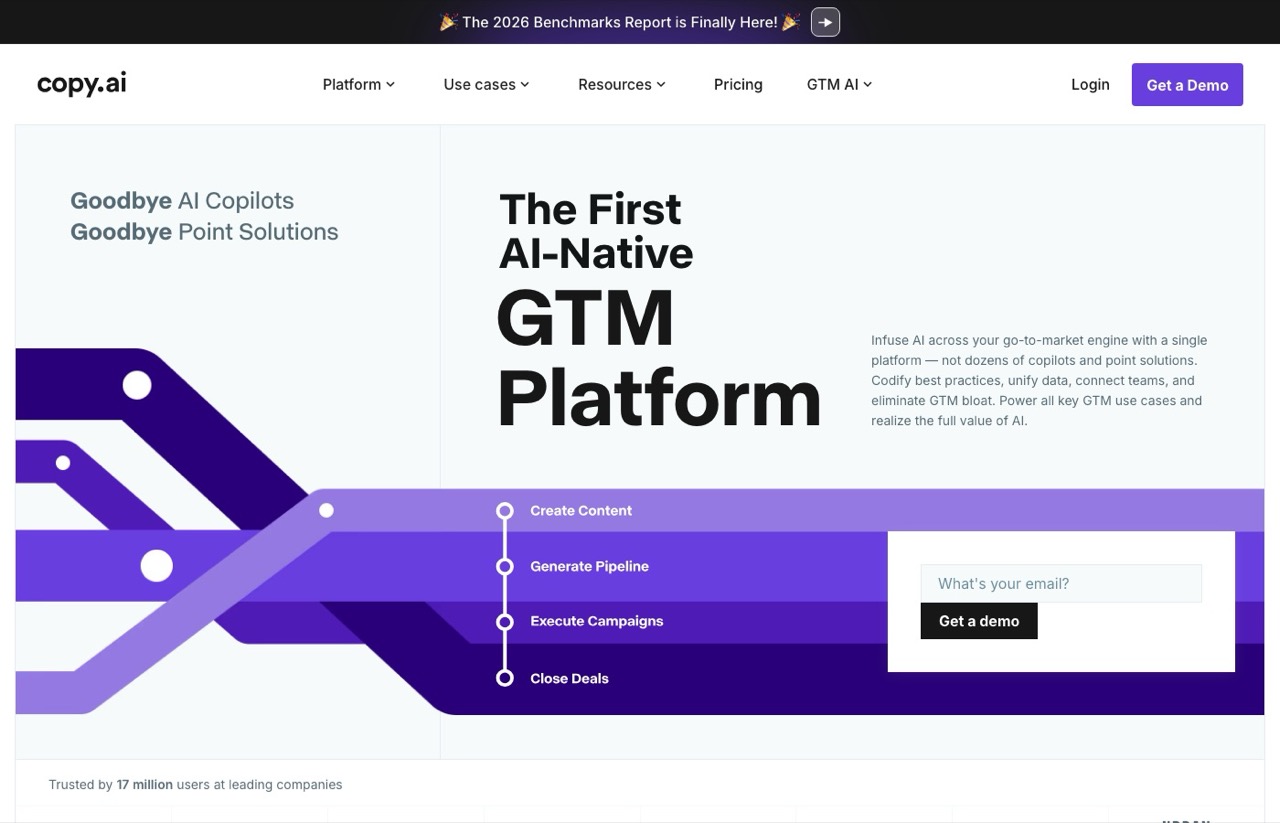
Copy.ai is built for spinning up many short-form variants fast, ad copy, subject lines, product descriptions, and the like. Like Sudowrite, it is refreshingly honest about the engine: its pricing page advertises access to OpenAI, Anthropic, and Gemini models directly.
Pros:
- Fast at generating many short-copy variations at once.
- Openly lists the frontier models it runs on.
- Template library aimed at sales and marketing copy.
Cons:
- At $29 a month, you are paying wrapper pricing for models you could prompt yourself.
- Long-form quality trails the sources it runs on.
Best for: teams that want batches of short marketing copy without prompt-wrangling.
Pricing: Chat plan is $29 a month ($24 billed annually).
Free trial: Yes, a limited plan to test it.
Bottom line: Fine if the variant workflow saves your team real time. If you are comfortable prompting, the source does the same job cheaper.
7. QuillBot (Best for Rewriting and Paraphrasing)
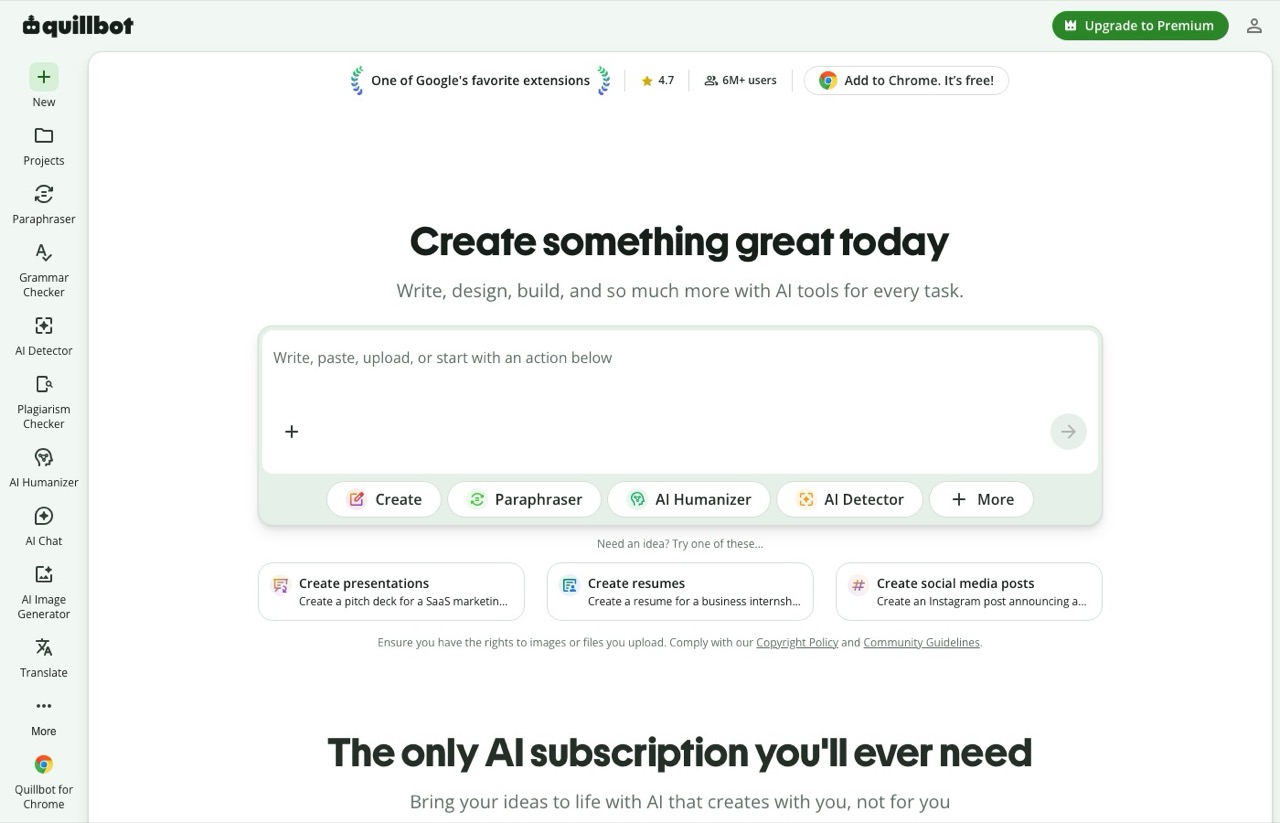
QuillBot earns its place because it does one job better than a raw chat window: reworking text you already have. Its paraphraser rewrites a sentence in different tones and lengths on demand, which is genuinely faster than re-prompting a model for each variation. Around that core it stacks a grammar checker, summarizer, and citation tools.
Pros:
- Fast, controllable paraphrasing in multiple tones, the thing it is built around.
- Generous free tier that covers light rewriting without a card.
- Bundles grammar, summarizing, and citations in one place for students and researchers.
Cons:
- It rewrites more than it creates, so it complements a source rather than replacing one.
- QuillBot stays quiet about which models power it, so you are trusting the output more than the engine.
Best for: students, researchers, and anyone who rewrites existing text more than they draft from scratch.
Pricing: Free tier with a 125-word paraphrase limit. Premium is $8.33 a month billed annually.
Free trial: Yes, a capable free tier.
Bottom line: The pick when your work is reworking words rather than generating them. Pair it with a source for the actual drafting.
The Honest Exception: Not Every Tool Is a Wrapper
It would be lazy to claim every AI writing tool is just a reskinned model, so here is the counter-example.
Writer built and runs its own family of large language models, called Palmyra, rather than routing your prompts to OpenAI or Anthropic. That is a real technical moat, and it is why enterprises with strict data-governance rules pick it. If you need an AI writing platform that owns its model stack end to end, Writer is the genuine article, priced for enterprise teams rather than solo creators. It is the rare exception: most of the category is wrappers, and the few that are not tell you so with pride.
Save Your Money: The Tools to Skip
These show up on every roundup, but once you have seen the token math, they are hard to justify for most people.
Rytr at $7.50 a month and Writesonic at $79 a month are both interfaces over the same frontier models, and neither discloses much special sauce for the price. Rytr is cheap enough to be harmless if the templates click for you. Writesonic has drifted toward SEO and AI-search tracking, so it is less a pure writing tool than it used to be. For straight drafting, neither beats going to the source. Spend the money on a Claude or ChatGPT subscription instead and get far more usage.
How to Choose an AI Writing Tool
Before you pay for anything, run your use case through these questions. They are the same ones I ask before adding any tool to my own stack.
- Do you actually need a workflow, or just the writing? If you only need drafts, go to the source (Claude or ChatGPT). Pay for a wrapper only when it automates a real process you would otherwise build yourself.
- Are you a team or a solo writer? Brand-voice governance across a team (Jasper) is worth paying for. A solo creator rarely needs it.
- What kind of writing is it? Fiction rewards a purpose-built tool (Sudowrite). Marketing copy, blogs, and email usually do not need more than a source plus an editing pass.
- Do you want to generate or to polish? Generators (the sources, Jasper, Copy.ai) write from scratch. Assistants (Grammarly, QuillBot) improve or rework what you already wrote. Most serious writers use one of each.
- How much will you actually write? Heavy volume makes a flat subscription to a source far cheaper than any per-output wrapper.
When Not to Use an AI Writing Tool at All
The honest answer is that AI writing has a ceiling, and pretending otherwise is how the internet filled up with slop.
Use a human, or heavy human editing, when the writing carries your reputation: a keynote, a sales page your business depends on, anything with legal or medical stakes, or a personal story only you can tell. AI is phenomenal for first drafts, outlines, variants, and getting past the blank page. It is dangerous when you ship its output unread. I have written a whole piece on how to avoid AI slop if you want the full method, but the short version is this: the tool writes the draft, you own the judgment.
Ryan's Final Thoughts
The best AI writing tool for most people is a direct subscription to a source, Claude or ChatGPT, plus an editing pass. Everything else on this list has to justify a markup over models you can already reach yourself, and only a few genuinely do.
The tool vendors will never tell you the last part. The model is commoditized now. The real edge is the system you wrap around it, the prompts, the skills, and the workflows that turn a good model into publishable work on the first try. That is exactly what I packaged into my AI Skills Stack, built on a decade of marketing and SEO work rather than a folder of generic templates. You can start with the free skills and see the difference the system makes. The tool is cheap. The judgment is the moat.
AI Writing Tools FAQs
Which AI writing tools are just wrappers?
Most of them, and a few say so openly. Sudowrite states it runs "the latest Claude models by Anthropic" and "several models created by OpenAI." Copy.ai advertises "access to OpenAI, Anthropic, and Gemini models." Grammarly and QuillBot stay quiet about what sits underneath. The honest exception is Writer, which built and runs its own family of models called Palmyra rather than routing your prompts to OpenAI or Anthropic.
Is Claude or ChatGPT better for writing?
Claude is the better writer and my pick if you buy only one. ChatGPT is the better generalist. Pick ChatGPT over Claude when your writing leans on research and multimedia, and pick Claude when the output quality of the prose itself is what matters. Claude Pro is $17 a month billed annually ($20 monthly), and ChatGPT Plus is $20 a month, so the cost is not the deciding factor.
Why are AI writing tools so expensive compared to the API?
Because the markup is on the interface, not the intelligence. A 1,200-word blog post is roughly 1,600 output tokens, using the rule of thumb of about 750 words per 1,000 tokens. Even on a premium model like Claude Sonnet 5, that draft runs about two cents. So 15 blog posts cost the tool maybe 10 to 30 cents in raw API calls, and they charge you $29. That markup is defensible when the wrapper genuinely adds workflow, brand voice, or team features. It is not defensible when it just adds a text box.
What is the cheapest good AI writing setup?
A single source subscription plus a free editing pass. Claude or ChatGPT at $20 a month covers the writing, and Grammarly's free tier gives you 100 AI prompts a month for the polish. QuillBot's free tier adds paraphrasing within a 125-word limit. That combination costs less than most single wrapper tools and gives you the model the wrappers are reselling.
When should I not use an AI writing tool?
When the writing carries your name and your risk. Skip it for a keynote, a sales page that has to convert, anything with legal or medical stakes, and any personal story. A generator is built to produce something plausible, which is the opposite of what those pieces need.