
How to Automate SEO Content with AI That Ranks (No Slop)
I built an AI SEO system that drafts, fact-checks, and ships a blog post every day without the slop that gets sites buried. The barrier to publishing AI content dropped to near zero, so the feeds filled up fast with articles that read fine and say nothing.
What an AI SEO System Actually Solves
You have probably seen the cautionary tale. A site cranks out hundreds of AI articles, ranks for a few months, then loses almost all of its traffic after an algorithm update. People walked away thinking AI content is dead or that Google hates automation.
That is the wrong lesson. The problem was never speed. You can publish daily and still rank. What gets sites buried is slop, meaning unverified claims, near-duplicate pages, and templated content that reads like a machine made it at scale. So I stopped asking how to publish faster and started asking how to get the speed without the things that trigger a penalty.
Quality is the whole game now. I made the same point in my piece on why most AI marketing advice is wrong, and this system is how I put that belief into practice.
Why Programmatic SEO Got Penalized
ClickUp's blog lost roughly 97.6% of its organic search traffic in 15 months, falling from about 1.19 million monthly visitors in early 2025 to around 28,000 by April 2026. Here is the telling part. It was not a backlink problem. The site's Domain Rating actually rose during the collapse and its referring domains grew.
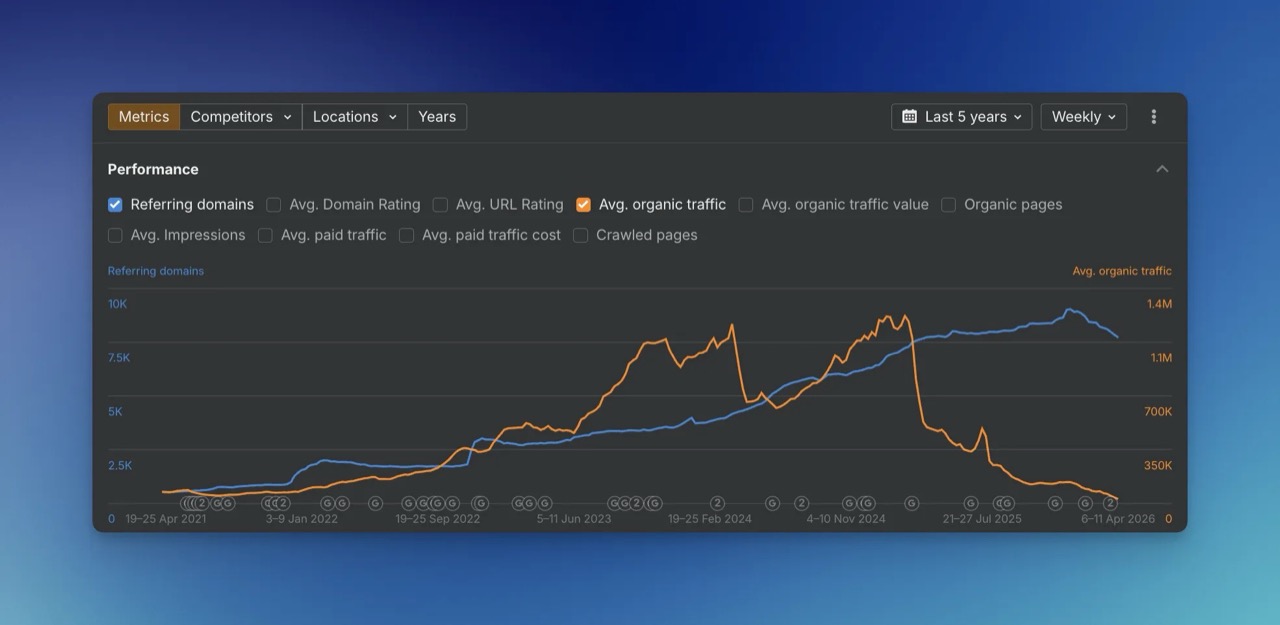
The decline got pinned on scaled, templated content and over-promotional listicles that ranked ClickUp first in its own comparison posts. You can read the full breakdown of the ClickUp traffic collapse for the numbers. The takeaway is simple. Automation was not the crime. The slop was.
So the goal is not to slow down. The goal is a pipeline where the things that get you penalized cannot reach the live site in the first place.
How My AI SEO System Works (Sheet Row to Published Post)
The whole thing runs off a single spreadsheet. Each row is one post: the topic, the type of post it should be, the primary keyword, and the title and slug.
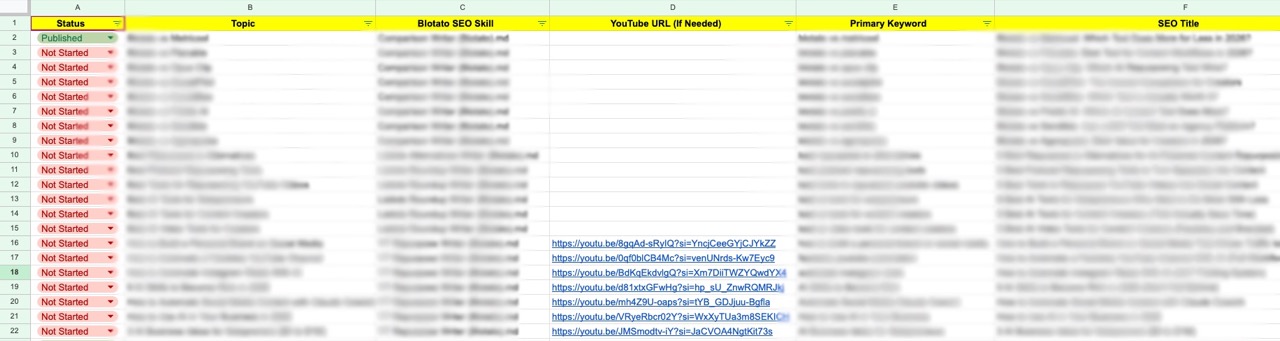
When the system runs, it grabs the top unstarted row and routes it to the right playbook based on the post type. From there it researches the topic live, writes the full draft, pulls real screenshots, generates a featured image, runs a stack of safety checks, and stages the post for review. No one touches a keyboard until the approval step. I built the same kind of skill-driven flow when I set up my system to repurpose YouTube videos with Claude Code, and this extends that idea to a full daily publishing loop.
That is the speed half, and it is genuinely fast. The hard half is everything built in to stop slop before it ships.
The 5 Things That Keep My AI SEO System From Producing Slop
These five guardrails are what separate a useful AI SEO system from a content firehose that gets a site penalized.
1. It Fact-Checks Itself, Adversarially
This is the part almost no AI workflow does. After the first draft is written, a second pass goes back through every factual claim and actively tries to disprove it. Not whether the sentence reads confidently, but whether it is actually true and where the proof is.
This is not theoretical. On the first post the system shipped, that adversarial pass caught three real factual errors the first draft had stated with full confidence. The model that wrote a claim is the worst judge of whether the claim is true, so a separate verification pass does the catching.
2. It Scans the Whole Cluster for Duplicate Content
Near-duplicate pages are one of the clearest signals of low-effort content at scale. Publish ten posts that are 80% the same paragraph with the nouns swapped, and search engines notice.
Before anything publishes, the system compares the new post against the rest of the blog. Overlapping angles get flagged and reworked. Every post has to earn its place by being meaningfully different, not just technically a new URL.
3. It Mixes Content Types on Purpose
Publish ten comparison posts in a row and your blog reads like a template factory, even if each one is well written. A real editorial calendar does not look like that.
Deciding what goes in that queue is the part that got cheap, which is the case I make in my breakdown of where the advantage moved in SEO content strategy.
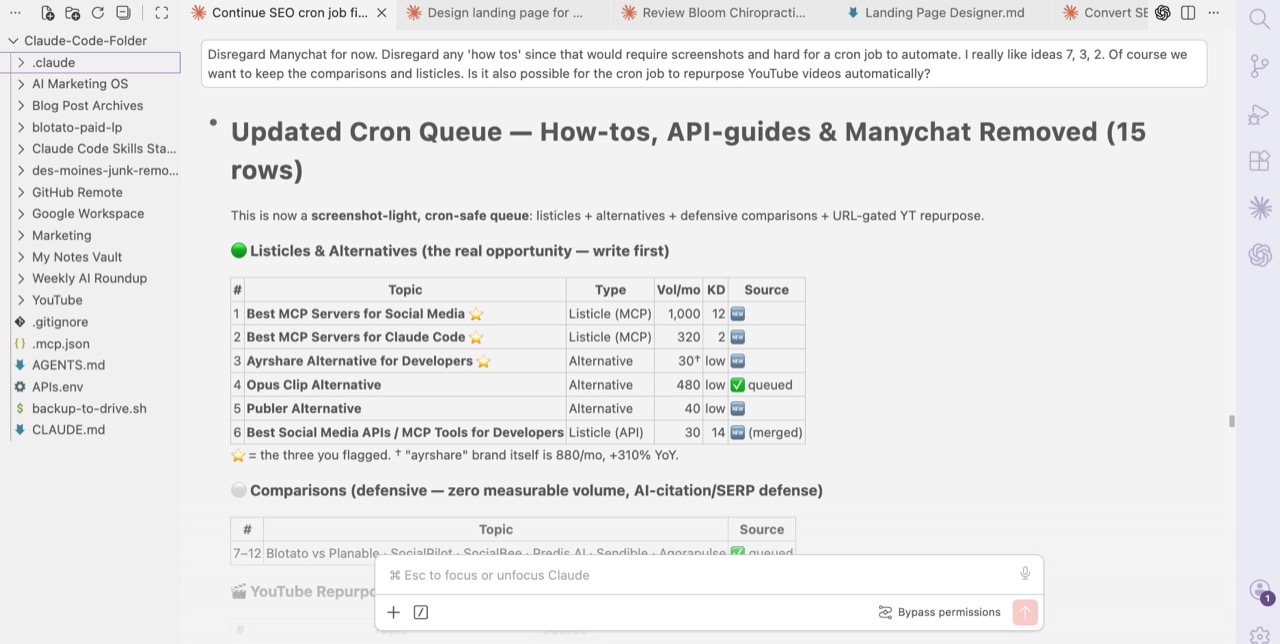
The system interleaves formats, rotating a comparison, then a listicle, then a how-to guide, then a deeper explainer. The calendar reads like a human team planned it. That is the difference between a content team running the blog and a script running it, and both readers and search engines pick up on it.
4. SEO Expert Inputs Before Anything Publishes
The system drafts, but it does not get the final say. Every post passes through my own SEO judgment before it goes live. That is the human expertise the model cannot replace. Keyword targeting, search intent, internal linking, the title and slug, the angle that will actually rank. Those are the calls I make, not the machine.
This is the part that separates my output from the flood of auto-published AI content. The slug and title on an SEO page live forever and shape how the page performs. Years of testing what ranks and what does not is exactly the input you cannot automate away, so I put it in before the post ever reaches a public URL. That is the gap I keep running into with the platforms built to deploy changes on their own, and it is the whole reason a tool like Search Atlas is a harder sell on a single site than its pricing page suggests.
5. Every Post Gets a Unique Angle
Most AI blog posts are the same article wearing a different title. The model read the top ten results, blended them, and handed back a slightly reworded average of what already exists. That is the definition of forgettable.
I will not ship that. Every post has to bring a take the other results do not have, whether that is a first-hand result, a contrarian opinion, or a framing nobody else used. If a draft just restates the consensus, it does not run. That is what makes the content worth reading and worth citing, instead of one more recycled page competing with a thousand identical ones. The AI SEO tools I actually use are built around this same bar: quality and citability over raw volume.
What This Means for AI and SEO
This is not theory for me. The same disciplined system is what took one of my sites to 21.3K clicks and 662K impressions over three months, at an average position of 6.1.
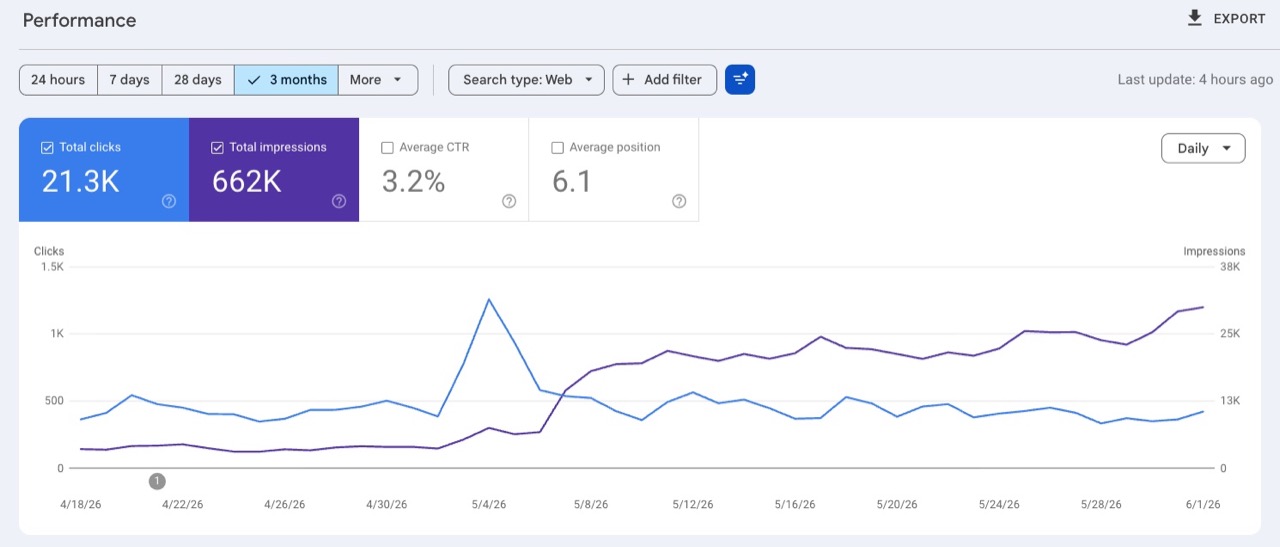
The takeaway is not to automate everything. It is the opposite. The real edge is automating the 95% that is mechanical, meaning the research, the drafting, the formatting, the image, the safety checks, and keeping a human in the loop on the 5% where brand and SEO risk actually live.
People hear AI content system and picture a firehose of garbage. The better version is a system that is more disciplined than a human team, not less. One that fact-checks harder, dedupes more thoroughly, and refuses to ship anything that fails a check. Mine runs on a set of Claude Code skills wired to that spreadsheet, and you can find the writing skills I use in my Claude Code Skills Stack, though the principle holds no matter what you build it with. If you want the manual version of the same standard, my guide on how to avoid AI slop covers it.
Ryan's Final Thoughts
Volume is free now. Hype is free. Slop is free. What is rare in 2026 is a real person with real opinions running a disciplined process and publishing the results. An AI SEO system gives you the speed of automation with the quality bar of an editor, as long as you build the guardrails first and the speed second. Think first about where the real risk lives, then automate fast around it. That is how you publish daily content that ranks without the slop, and it is the same mindset behind how I think about winning in AI search. If you want the strategy layer underneath this system rather than the publishing machinery, my primer on getting named inside AI answers covers it. For the rules these systems have to respect, the Google spam policies are the baseline.
AI SEO System FAQs
What is an AI SEO system?
An AI SEO system is an automated pipeline that researches, writes, fact-checks, and publishes search-ready content with minimal manual work. The good ones build in quality controls like fact verification, duplicate-content scans, and an SEO expert review step so the output ranks instead of getting penalized for being low-effort.
Does Google penalize AI-generated content?
Google does not penalize content for being AI-generated. It penalizes unhelpful, scaled, low-quality content regardless of how it was made. Per Google's own spam policies, the issue is content created mainly to game rankings, not the tool used to write it. Verified, original, genuinely useful AI content can rank fine.
How do you automate SEO content without getting penalized?
Automate the mechanical parts and keep an SEO expert on quality. Add an adversarial fact-check pass, scan for near-duplicate pages across your blog, vary your content formats so the calendar does not look templated, give every post a unique angle, and review each one before it goes live. Speed is fine. Unverified slop is what triggers penalties.
Can you really publish a blog post a day with AI?
Yes, if each post clears a real quality bar. A daily cadence is sustainable when the system does live research, verifies its own claims, and an expert approves the final draft. The cadence is not the risk. Shipping unchecked, near-identical posts at that cadence is.